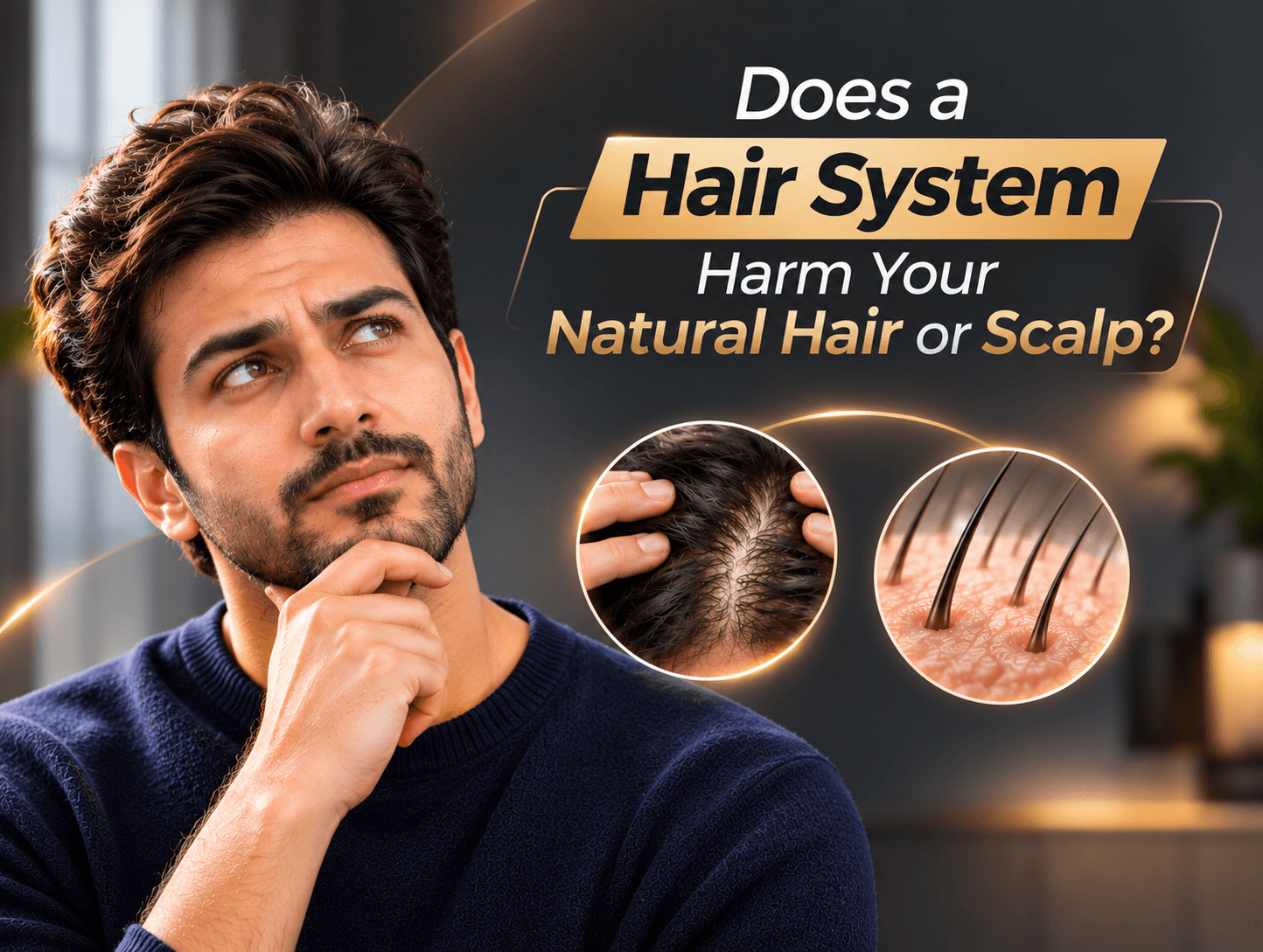
Hair systems have become a popular non-surgical option for men experiencing hair thinning, receding hairlines, or advanced hair loss. They offer the appearance of fuller hair without requiring surgery and can be customized to blend with existing natural hair. However, one common concern remains: Can wearing a hair system damage your natural hair or scalp?
The answer depends on how the hair system is fitted, attached, and maintained. A properly fitted hair system doesn't automatically cause damage, but excessive pulling, unsuitable adhesives, and poor scalp hygiene can create problems. Understanding these factors can help you choose a suitable hair replacement system while taking care of your existing hair and scalp.
How Hair Systems Are Attached
A hair system is a Non-Surgical Hair Replacement solution designed to cover areas affected by hair loss. It consists of hair attached to a specially designed base that sits over the scalp. Depending on the type, a system may use 100% human hair and can be customised to match the wearer's existing hair.
The attachment method plays an important role in scalp comfort and the condition of the surrounding natural hair. The two common attachment options are clip-on and stick-on hair systems.
Clip-On Hair Systems
A Clip-On Hair System attaches to existing natural hair using clips and can be removed when needed. It generally doesn't require shaving, making it suitable for some men who prefer a removable option. However, clips need sufficient natural hair for support, and incorrect placement may create unnecessary tension on the surrounding strands.
Stick-On Hair Systems
A Stick-On Hair System uses professional adhesives or tapes to attach the base directly to the scalp. It's designed for more continuous wear and may require shaving the attachment area. Since adhesives come into contact with the skin, choosing suitable products and following proper application and removal techniques are important for maintaining scalp comfort.
Can Hair Systems Damage Natural Hair?
Wearing a hair system doesn't automatically cause natural hair loss. However, incorrect fitting, excessive pulling, and improper removal can affect the condition of existing hair. The possibility of damage depends mainly on the attachment method and how carefully the system is handled.
Hair Pulling and Tension
Clip-on systems rely on existing natural hair for attachment. If clips are too tight or repeatedly pull on the same strands, they may cause breakage or place unnecessary tension on the hair. Prolonged tension may also contribute to traction-related hair loss in affected areas. Proper fitting and suitable clip placement help reduce these concerns.
Improper Hair System Removal
Removing an adhesive-based hair system without correctly releasing the tape or adhesive can pull on surrounding natural hair and irritate the scalp. Repeated rough removal may contribute to hair breakage or discomfort around the attachment area. Using appropriate removal products and gentle techniques helps reduce unnecessary stress.
It's also worth understanding that existing hair loss may continue naturally while wearing a hair system. This doesn't necessarily mean the system is responsible for the changes in hair density.
Can Hair Systems Cause Scalp Irritation?
The scalp can react differently to adhesives, tapes, clips, and other materials used in hair systems. While many men experience no significant discomfort, some may develop irritation depending on their skin sensitivity and attachment method.
Adhesive Sensitivity
Certain adhesives and tapes may cause redness, itching, dryness, or burning sensations in sensitive individuals. These reactions can occur when products don't suit the scalp or are applied over already irritated skin. Choosing appropriate adhesives and following correct application instructions can help reduce avoidable discomfort. Persistent or worsening reactions should be assessed by a qualified healthcare professional.
Scalp Hygiene
The scalp continues producing sweat and natural oils beneath a hair system. Without appropriate cleaning, these can accumulate along with adhesive residue and dead skin cells, potentially causing itching or irritation. Maintaining proper scalp hygiene and following the recommended maintenance routine are important for comfortable wear.
Paste your video URL in the inspector
Common Mistakes That Can Affect Hair and Scalp Health
Some hair and scalp problems are linked to incorrect handling rather than the hair system itself. Avoiding a few common mistakes can make a meaningful difference to everyday comfort.
Incorrect fitting: A poorly fitted system may create unnecessary pressure, pulling, or friction around attachment areas.
Using unsuitable adhesives: Products that don't agree with your skin may lead to irritation or discomfort.
Neglecting maintenance: Accumulated sweat, oil, and adhesive residue can affect scalp hygiene.
Rough removal: Pulling clips or adhesive-based systems forcefully may damage existing hair or irritate the skin.
Ignoring discomfort: Continuing to wear a system despite persistent itching, redness, or soreness may worsen an existing problem.
These concerns highlight why proper fitting, appropriate products, and regular care are essential parts of wearing a hair replacement system.
5. How to Protect Your Hair and Scalp
Maintaining healthy natural hair and scalp while wearing a hair system requires attention to cleaning, attachment, and handling. The right routine depends on the type of system and individual scalp requirements, but several basic practices are useful.
Keep your scalp clean: Follow a suitable cleaning routine to remove sweat, natural oils, and attachment residue.
Avoid unnecessary pulling: Make sure clips aren't excessively tight and avoid aggressive brushing around attachment points.
Use proper removal techniques: Release adhesives carefully before lifting the system instead of pulling it away forcefully.
Follow maintenance guidance: Clean and maintain the hair system according to its attachment method and usage.
Monitor scalp comfort: Pay attention to persistent itching, redness, tenderness, or burning and seek professional guidance when required.
Men who exercise regularly or experience heavy sweating may need additional attention to scalp hygiene. The aim is to keep both the natural hair and scalp properly maintained without excessive cleaning or unnecessary friction.
Choosing a Suitable Hair System
The right hair replacement system should be selected according to your existing hair, scalp sensitivity, lifestyle, and attachment preferences. Both clip-on and stick-on systems have different requirements, so neither option is automatically suitable for everyone.
Factor | Clip-On Hair System | Stick-On Hair System |
|---|---|---|
Attachment | Clips attached to natural hair | Adhesive or tape |
Existing hair | Requires sufficient suitable hair | May suit areas with limited hair |
Shaving | Generally not required | May be required |
Main concern | Excessive tension on hair | Adhesive sensitivity |
Removal | Easily removable | Requires proper adhesive release |
If your existing hair is sufficient to support clips, a clip-on system may be worth considering. If there's limited hair for clip attachment, a stick-on system may be more appropriate, depending on scalp suitability. Professional assessment can help determine which attachment method works with your hair-loss pattern and everyday routine.
Frequently Asked Questions
Does wearing a hair system cause natural hair loss?⌄
Can hair system glue damage the scalp?⌄
Can natural hair grow underneath a hair system?⌄
Is it safe to wear a hair system every day?⌄
Conclusion
Wearing a hair system doesn't automatically damage your natural hair or scalp. However, incorrect fitting, excessive tension, unsuitable adhesives, and inadequate maintenance can increase the possibility of hair breakage or scalp irritation. Choosing an appropriate attachment method and following proper care practices can help reduce these avoidable concerns.
Whether you prefer a clip-on or stick-on hair system, the right choice depends on your existing hair, scalp sensitivity, and lifestyle. Understanding these factors helps you approach Non-Surgical Hair Replacement with realistic expectations while taking care of your natural hair and scalp.
Call us 📞+91 9222666111 today for personalized guidance on hair loss solutions! 📍 Book your consultation now at www.americanhairline.com and start your journey with Non Surgical Hair Replacement today. 👉 [Fill out this form for personalized advice.]
Ready to regain your confidence?
American Hairline provides premium, non-surgical hair replacement systems designed specifically for you. Don't wait to change how you feel.
Found this helpful? Get more of our articles in your Google results.
Add to Preferred Sources0 Comments
No comments yet. Be the first to share your thoughts!
Leave a Reply
Your email address will not be published. Required fields are marked *