Choosing a custom hair system isn't just about selecting a hairstyle or matching your existing hair colour. The type of hair used in the system plays an important role in how it looks, feels, moves, and responds to everyday styling. One of the most common decisions people face is whether to choose human hair or synthetic fiber.
Both materials are used in hair replacement systems, but they offer different experiences. Human hair is often preferred for its familiar texture and styling flexibility, while synthetic fiber is designed to maintain certain hairstyles and textures.
For men exploring Non-Surgical Hair Replacement, the right choice should complement their existing hair, suit their lifestyle, and match how much time they're comfortable spending on hair care.
Understanding Human Hair and Synthetic Fiber Hair Systems
A custom hair system is a non-surgical hair replacement option designed to provide coverage in areas experiencing thinning, recession, or advanced hair loss. It generally consists of a base fitted to the required scalp area, with hair attached to create the desired hairstyle. The hair material itself has a significant influence on the finished appearance.
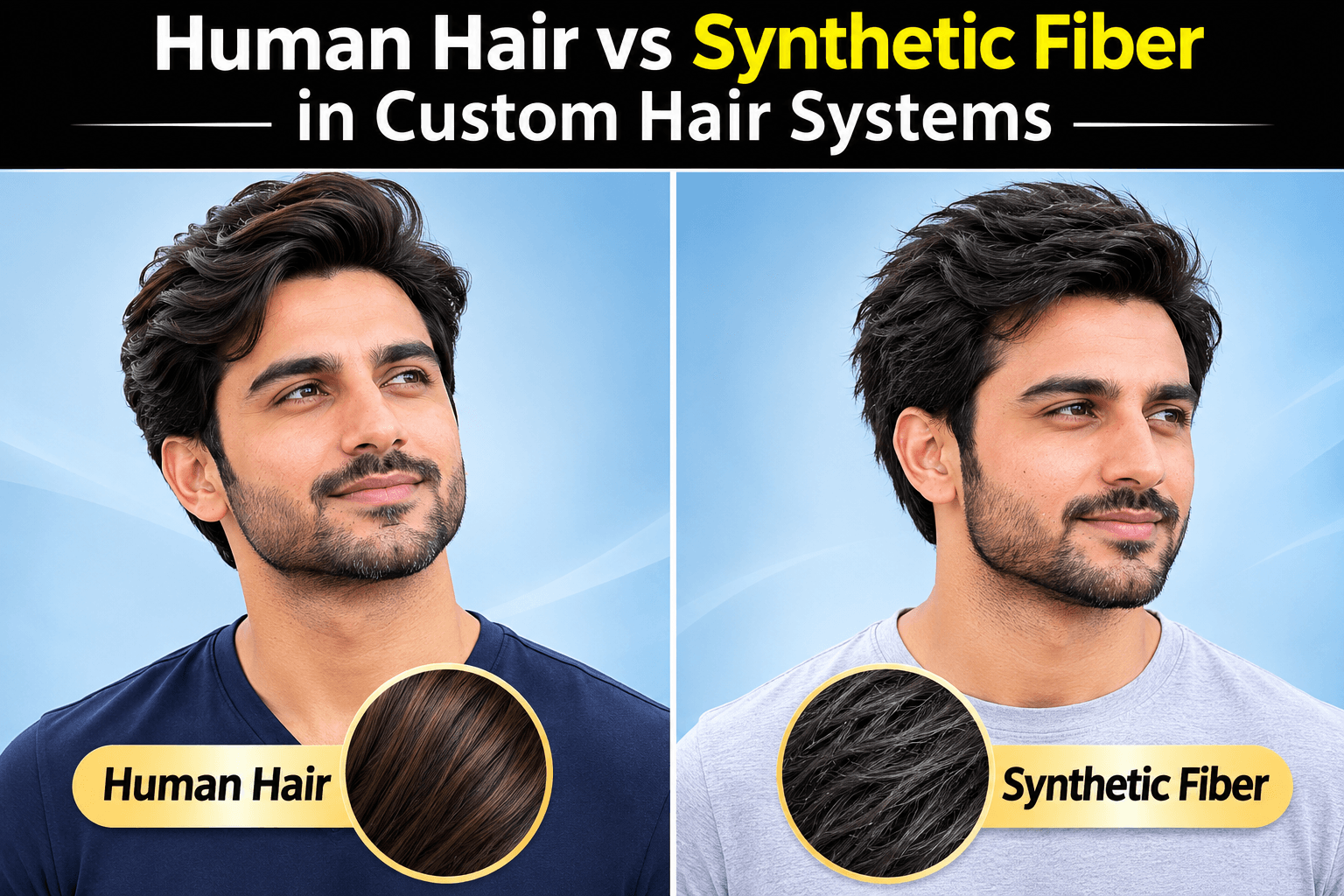
Human hair systems use real human hair, which can be selected according to colour, texture, and styling requirements. A system made with 100% human hair offers characteristics similar to naturally growing hair, including familiar movement and responses to washing or styling.
Synthetic hair systems use manufactured fibers designed to imitate the appearance of human hair. These fibers can be produced in different colours, lengths, and textures, including straight, wavy, and curly patterns. Many synthetic fibers are manufactured to retain a particular shape, which may appeal to someone who prefers a consistent hairstyle.
The main distinction lies in how the strands behave. Human hair responds more naturally to changes in styling and environmental conditions, whereas synthetic fiber tends to behave according to its manufactured properties.
Human Hair vs Synthetic Fiber: Key Differences
Human hair and synthetic fiber can both be used in custom hair systems, but their characteristics affect the overall wearing experience. The differences include movement, styling possibilities, texture, and care requirements.
Feature | Human Hair System | Synthetic Fiber Hair System |
|---|---|---|
Material | Real human hair | Manufactured fibers |
Appearance | Natural variations in texture and movement | Depends on fiber quality and finish |
Hair movement | Generally moves like naturally growing hair | Movement varies with fiber construction |
Styling flexibility | Allows more hairstyle adjustments | Often designed to retain a particular style |
Heat styling | May be possible with suitable precautions | Limited to compatible heat-resistant fibers |
Humidity response | May react to moisture and humidity | Often retains its manufactured shape |
Colour matching | Offers varied shades and texture options | Depends on available synthetic shades |
Hair care | Requires gentle washing and conditioning | Requires fiber-specific cleaning and handling |
Longevity | Depends on quality, usage, and maintenance | Depends on fiber properties, friction, and care |
The material alone doesn't determine the quality of a hair replacement system. A human hair system with unsuitable density or poor colour matching may not achieve the desired appearance. Similarly, a carefully selected synthetic system may work well for someone who prefers a particular hairstyle.
The construction of the system, hair direction, attachment method, and professional customisation all contribute to the finished result. Looking at these factors together provides a more useful comparison than deciding purely on the hair material.
Natural Appearance, Texture, and Hair Blending
For men considering hair replacement, one of the biggest priorities is achieving a hairstyle that looks balanced with their existing hair and facial features. This is where the texture and movement of the hair material become particularly relevant.
How Human Hair Supports Natural Hair Blending
Human hair contains natural variations in strand thickness, texture, and movement. These subtle differences can contribute to a realistic appearance, especially when the replacement hair needs to blend with naturally growing hair around the sides and back of the head.
For example, someone whose existing hair has a slight wave may prefer a human hair system with a similar texture. Matching the wave pattern helps the replacement hair sit more consistently with the surrounding hair.
Human hair also allows a broader range of colour and texture adjustments, depending on its quality and processing. However, achieving a natural-looking finish still requires careful attention to hair density, hairline design, and the direction in which the strands fall.
Can Synthetic Fiber Look Realistic?
Modern synthetic fibers can be designed to imitate various characteristics of human hair, including texture and colour variation. Some fibers have a finish intended to reduce excessive shine, while others are manufactured to hold a particular wave or curl pattern.
However, synthetic hair may reflect light differently or move more uniformly than human hair. These characteristics depend on the quality and type of fiber used and may become noticeable when the system is positioned alongside existing natural hair.
This doesn't mean synthetic hair cannot create a convincing appearance. Careful material selection and customisation remain important.
The Role of Density and Hairline Design
Regardless of the hair material, density and hairline design strongly influence the final appearance. Hair density refers to how much hair is distributed across the system, and the appropriate level depends on factors such as the individual's age, remaining hair, and preferred hairstyle.
A system with excessive density may appear disproportionate when combined with thinner natural hair. Similarly, an unsuitable hairline shape can affect how well the hairstyle complements the face. Choosing the right hair material is important, but selecting the correct density, colour, and hairline design is equally essential.
Styling Flexibility and Everyday Wear
Your preferred hairstyle and daily grooming habits can make a considerable difference when choosing between human hair and synthetic fiber. Some people enjoy changing their hairstyle depending on the occasion, while others prefer keeping the same appearance throughout the week.
Styling With Human Hair
One of the main characteristics of human hair systems is their styling flexibility. Depending on the quality of the hair and the construction of the system, wearers may be able to change the direction, texture, or overall finish of their hairstyle.
Human hair generally allows for different styling approaches, such as:
Side-parted hairstyles: Creating a defined parting for a neat, structured appearance.
Textured hairstyles: Adding movement and definition for a more relaxed finish.
Voluminous hairstyles: Adjusting the hair's shape to create controlled fullness.
Combed-back styles: Directing the hair backwards when the system's hairline and ventilation support the look.
Some human hair systems can also be styled using suitable heated tools. However, excessive heat can damage the strands, so styling techniques should follow the recommended care instructions.
Human hair responds to environmental conditions in ways similar to growing hair. Humidity and moisture may influence the hairstyle, meaning occasional adjustments may be necessary.
Styling With Synthetic Fiber
Many synthetic hair systems are manufactured with a particular hairstyle already built into the strands. This helps the hair retain its intended shape after appropriate cleaning and routine handling.
For someone who consistently wears a short, neat hairstyle, this characteristic may be convenient because there may be less need to repeatedly reshape the hair.
However, synthetic fibers usually offer fewer options for changing hairstyles. Standard synthetic materials can be damaged by heated styling tools, although certain heat-resistant fibers permit controlled heat styling within their specified limits.
Maintenance, Hair Care, and Longevity
Every hair replacement system requires appropriate maintenance, but human hair and synthetic fiber have different care needs. Understanding these requirements before selecting a system can help prevent unnecessary damage and make everyday handling easier.
Caring for a Human Hair System
Human hair in a replacement system doesn't receive natural scalp oils in the same way growing hair does. As a result, maintaining softness and managing dryness are important parts of the care routine.
Gentle washing, suitable conditioning, and careful detangling can help maintain the appearance and feel of the strands. Harsh cleansing products or excessive styling can affect the hair's condition.
Human hair can also become tangled through friction or rough brushing. Handling it gently, especially when wet, can help reduce unnecessary strain on the strands and their attachment to the base.
Caring for a Synthetic Fiber Hair System
Synthetic fiber care focuses on preserving the material's manufactured texture and shape. Although many synthetic hairstyles retain their original pattern, the fibers can develop tangles, roughness, or changes in appearance through repeated friction and unsuitable handling.
A suitable synthetic hair care routine generally involves:
Gentle cleansing: Use cleaning products appropriate for the particular fiber.
Careful detangling: Remove tangles without pulling aggressively on the strands.
Heat awareness: Keep standard synthetic fibers away from excessive heat.
Proper handling: Avoid unnecessary rubbing or friction that could affect the fiber surface.
Following care instructions: Different synthetic materials may require different cleaning and drying techniques.
Synthetic hair should not automatically be treated like human hair because products or styling methods suitable for one material may not work well for the other.
Which Hair Material Lasts Longer?
The lifespan of a hair system cannot be determined by its hair material alone. Human hair systems vary according to hair quality, base construction, frequency of use, styling habits, and maintenance. Synthetic systems are similarly influenced by fiber quality, daily friction, cleaning practices, and handling.
Instead of assuming that one type will always last longer, it's more useful to understand the maintenance requirements and expected performance of the specific system being considered.
Which Hair Type Should You Choose for Your Lifestyle?
Choosing between human hair and synthetic fiber becomes easier when you consider how you normally wear and style your hair. The material should support your daily preferences rather than require you to completely change your routine.
Choose Human Hair If Styling Flexibility Is Important
Human hair may be the more suitable option for individuals who enjoy adjusting their hairstyles and want replacement hair that behaves similarly to naturally growing hair.
It can also be useful when the system must blend with existing hair that has a specific texture or movement pattern. Men who prefer different hairstyles for professional and social situations may appreciate the freedom offered by human hair.
However, this flexibility comes with the need for suitable grooming and conditioning to preserve its appearance.
Consider Synthetic Fiber If You Prefer a Consistent Hairstyle
Synthetic fiber may appeal to people who prefer keeping the same hairstyle with limited changes throughout the day. A material designed to retain a particular shape can be useful when maintaining that style is a priority.
For example, someone who consistently prefers a short, structured hairstyle may find a suitable synthetic system meets their expectations without needing frequent restyling.
The main consideration is whether the available fiber texture, movement, and styling limitations align with the desired look.
Questions Worth Asking Before Making Your Decision
Before finalizing a custom hair replacement system, consider the following:
How often do I change my hairstyle? Frequent changes may favour human hair.
Will the system need to blend with my existing hair? Compare the texture and movement of both materials.
How much daily styling do I prefer? A consistent synthetic style may suit some routines, while human hair offers more flexibility.
Am I comfortable with the required maintenance? Both materials require care, but their routines differ.
What type of finish do I prefer? Hair density, colour, texture, and fitting should be assessed alongside the material.
The right decision should be based on how the particular hair system looks, how it behaves, and whether it suits your requirements. A professional consultation can help clarify how different materials perform with your preferred hairstyle and attachment method.
Conclusion
Human hair and synthetic fiber each have characteristics that can make them suitable for different custom hair systems. Human hair generally offers more styling flexibility, familiar movement, and greater possibilities for blending with existing natural hair. Synthetic fiber may be appropriate for someone who prefers a particular hairstyle that retains its shape with less frequent adjustment.
The decision shouldn't depend on the hair material alone. Hair quality, texture, density, fitting, maintenance expectations, and lifestyle all contribute to how well a system meets your needs. Understanding these factors helps you choose a hair replacement option that complements your appearance and daily routine.
Call us 📞+91 9222666111 today for personalized guidance on hair loss solutions! 📍 Book your consultation now at www.americanhairline.com and start your journey with Non Surgical Hair Replacement today. 👉 [Fill out this form for personalized advice.]
Ready to regain your confidence?
American Hairline provides premium, non-surgical hair replacement systems designed specifically for you. Don't wait to change how you feel.
Found this helpful? Get more of our articles in your Google results.
Add to Preferred Sources0 Comments
No comments yet. Be the first to share your thoughts!
Leave a Reply
Your email address will not be published. Required fields are marked *