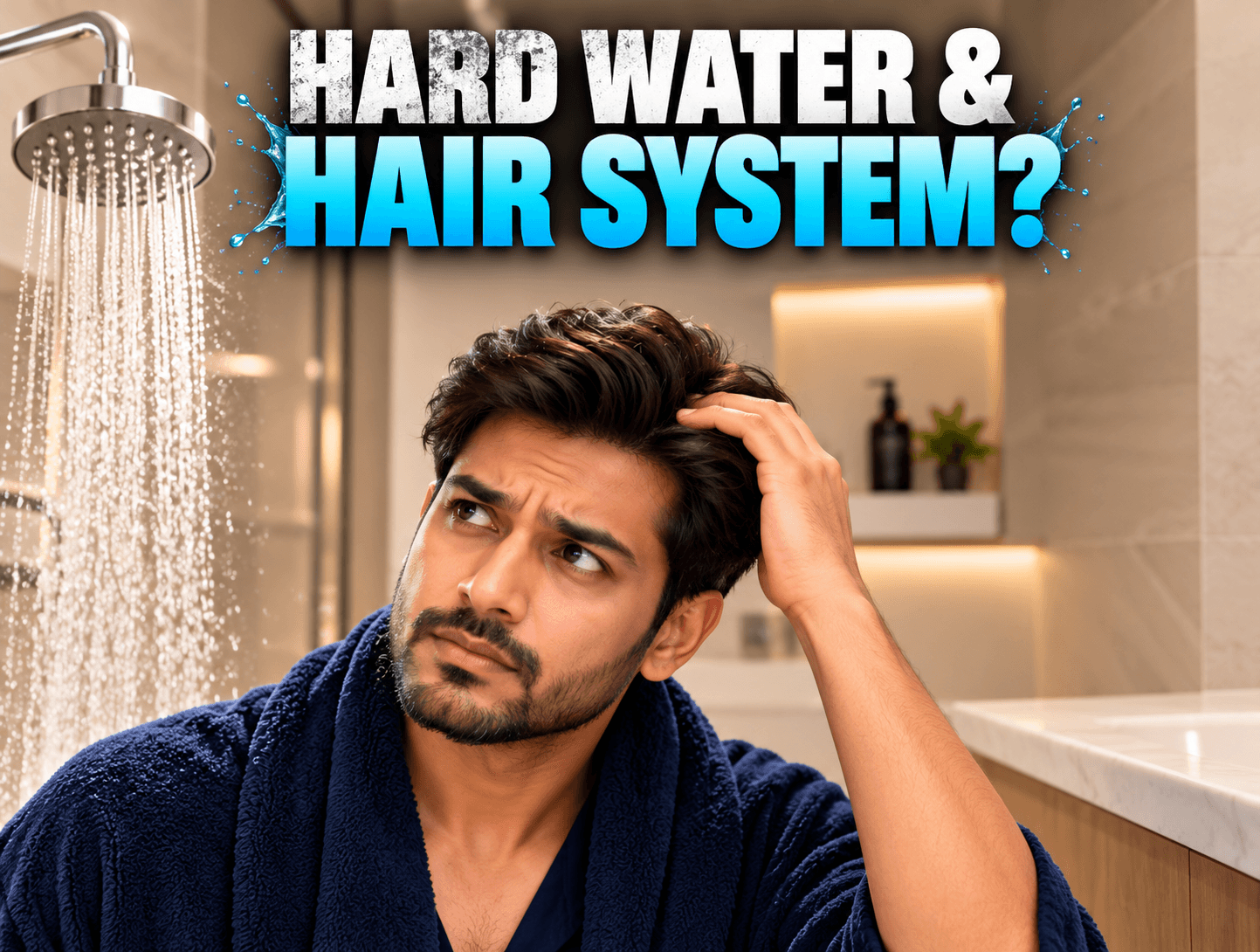
You've been taking care of your hair system, washing it with a suitable shampoo, styling it carefully, and following your usual grooming routine. But recently, you've noticed something different. The hair feels a little rougher, doesn't fall into place as easily, or seems to have lost some of its softness. You haven't changed your products, so it's natural to wonder what might be happening. The answer could be something you rarely think about while washing your hair: the water coming from your tap.
Hard water is a concern in many Indian households, particularly where groundwater, borewell water, or mixed water supplies are used. It contains dissolved minerals that can influence how hair responds to washing and cleansing products. For men using a human hair replacement system, this is worth understanding because the hair needs suitable care to maintain its texture and manageability. While hard water doesn't necessarily affect every hair system in the same way, repeated exposure may contribute to dryness, residue, and styling difficulties. Knowing what to look for and how to adjust your routine can make everyday hair system care much simpler.
What Is Hard Water and Why Does It Matter?
Water may look completely clear, but that doesn't mean it's free from dissolved minerals. Hard water contains relatively high levels of calcium and magnesium, which naturally enter water as it passes through rocks and underground deposits. These minerals aren't necessarily harmful during everyday household use, but they can affect how soaps and shampoos behave. When certain cleansing ingredients react with hardness minerals, residue may form and become more difficult to rinse away. This can influence the way hair feels after washing, particularly when mineral-rich water is used regularly.
You may have noticed white deposits around bathroom taps, a chalky layer on your showerhead, or marks on bathroom fittings. These are familiar signs of mineral residue, although they don't confirm the exact hardness of your household water. Similar mineral deposits may contribute to a coated feeling on hair, especially when combined with leftover cleansing products. For someone using non-surgical hair replacement, this matters because regular washing is part of maintaining the system's appearance. The quality of the water can therefore be an additional consideration alongside shampoo selection and conditioning.
Why Human Hair Systems Respond Differently
A human hair replacement system may contain 100% human hair, but the strands are no longer connected to a living scalp. Natural hair receives oils produced by the scalp, which can help lubricate the growing strands. Hair in a replacement system doesn't receive this continuing supply of natural oils along its length, so its softness depends more on appropriate external care. When repeated washing leaves mineral residue behind, maintaining a smooth texture may become more challenging. This doesn't mean that hard water automatically damages a hair system, but it explains why suitable cleansing, conditioning, and gentle handling are particularly important.
Understanding water hardness is therefore less about avoiding ordinary tap water altogether and more about recognizing how your washing environment can influence hair care. A hair system that feels dry or coated may need a review of its cleansing routine rather than an immediate change of shampoo. Checking water quality, avoiding excessive washing, and using products compatible with the system can help address possible contributing factors without making maintenance unnecessarily complicated.
How Hard Water Affects Your Hair System
The effects of hard water may develop gradually, which is why many men don't immediately connect changes in hair texture with their household water supply. Initially, the system may continue to feel soft and respond normally to styling. Over time, however, mineral residue and cleansing-product build-up may contribute to a rougher feeling on the strands. This can make the hair less manageable, particularly when it is brushed, combed, or styled regularly. The extent of these changes depends on the mineral content of the water, the products being used, and the condition of the hair system itself.
Dryness and Changes in Texture
One possible effect is reduced softness. When residue collects on the hair, the strands may feel coated or less flexible, making everyday grooming more difficult. Since human hair systems require suitable conditioning, this change can be particularly noticeable if the washing routine isn't providing enough care for the hair lengths. You might find that your usual hairstyle requires more effort or that certain sections become harder to comb. However, dryness can also result from excessive shampooing, heat styling, or general wear, so it's important to consider all possible influences rather than blaming water hardness alone.
Reduced Shine and Manageability
Hair generally looks shinier when its surface is relatively smooth and reflects light evenly. When deposits collect on the strands, the hair may appear duller, even if it has been washed recently. Some men may notice that their system looks less fresh under bright lighting or that it doesn't maintain its usual styled finish. Roughness can also make neighbouring strands catch against each other, increasing the likelihood of tangling. Trying to correct this by applying more styling products may add further residue, so reviewing the cleansing and conditioning routine is often a more useful starting point.
Does Hard Water Affect Every Hair System Equally?
Not necessarily. Different hair systems may respond differently depending on their construction, hair condition, attachment method, and maintenance routine. A clip-on hair system is generally removable and can be cleaned according to its specific care instructions, while a stick-on hair system requires washing methods appropriate for its adhesive or tape attachment. Regardless of the system type, harsh cleaning or aggressive scrubbing isn't a sensible response to suspected mineral build-up. Understanding the needs of your particular system is more useful than assuming the same washing technique will suit everyone.
Signs of Hard Water Build-Up on Your Hair System
Hard water effects aren't always obvious after a single wash. Instead, you may begin noticing small changes during everyday grooming. A hair system that previously felt smooth might start feeling slightly stiff, or you may find yourself spending more time arranging the hair into your preferred style. Although these changes can be associated with mineral residue, they're not exclusive to hard water. Product build-up, friction, heat exposure, and normal wear can produce similar results.
Changes Worth Paying Attention To
What You Notice | What It May Indicate |
|---|---|
Hair feels rough after washing | Mineral residue, product build-up, or dryness |
Hair appears less shiny | Surface residue or changes in hair condition |
Increased tangling | Roughness, friction, or inadequate conditioning |
Hair feels coated or heavy | Cleansing-product residue or mineral deposits |
Styling takes more effort | Changes in texture, dryness, or everyday wear |
These signs can help you identify when your hair care routine needs attention, but they don't confirm that hard water is responsible. If several changes appear together, consider whether you've recently changed your water source, shampoo, conditioner, or washing frequency. Looking at these factors can help you avoid unnecessary product changes.
How Can You Check Whether Water Quality Is the Problem?
A practical starting point is to observe your household water supply. If you've recently moved to another apartment or your building has started using a different water source, the mineral content may have changed. You can use a suitable water hardness testing kit to understand the calcium and magnesium levels more clearly. This is more reliable than judging hardness solely by how much shampoo lathers or whether your bathroom has visible deposits. If your hair system continues to feel rough despite appropriate care, a professional can help assess whether the issue relates to residue, washing habits, or the overall condition of the hair.
Hard Water and Hair Systems in Indian Cities
For men living in Indian cities, water quality can vary significantly depending on where they stay and how their building receives its supply. Some residential areas depend mainly on treated municipal water, while others use borewells, groundwater, or tanker supplies. Even within the same city, neighbouring buildings may have different water conditions. This means it isn't accurate to assume that every household in a particular city receives hard water. Understanding the actual water used in your home provides a better foundation for deciding whether any adjustments to hair system maintenance are necessary.
Daily life in Indian cities can also influence how frequently men wash and style their hair systems. Long commutes, outdoor work, dust exposure, and physical activity may make regular cleaning feel necessary. During warmer months, sweating can encourage more frequent washing, while humid weather may make styling more challenging. If the household water is mineral-rich, repeated washing may contribute to residue and dryness over time. However, humidity and hard water are different factors. Humidity influences how hair behaves in the surrounding environment, while hardness refers to dissolved minerals present in the washing water.
Consider someone who regularly travels for work and washes his hair system in different hotels or residential locations. The same shampoo may produce a slightly different result depending on the water being used. In one place, the hair may rinse easily and feel manageable, while elsewhere it may feel coated or require additional care. Changes in climate, styling habits, and cleansing products can also influence this experience, so water hardness isn't always the only explanation. Maintaining familiar, suitable hair care products while travelling can help keep the routine consistent and make changes in texture easier to recognise.
Rather than following city-wide assumptions about water quality, men using hair systems can benefit from paying attention to their individual circumstances. The source of water, frequency of washing, attachment method, and hair condition all contribute to the overall care experience. A routine that suits one person may need adjustments for someone living in a different environment. Understanding these differences makes it easier to care for a hair replacement system without treating every change in texture as a serious problem.
How to Protect Your Hair System from Hard Water
Looking after a hair system in hard water conditions doesn't have to involve a complicated collection of products. The most useful approach is to focus on water quality, suitable cleansing, and gentle handling. A consistent routine can help maintain the hair's manageability while reducing unnecessary friction and residue.
Practical Care Steps
1. Understand Your Household Water
If you suspect your water has high mineral content, consider using a suitable hardness testing kit. Where appropriate, a properly maintained water-softening system may help reduce calcium and magnesium levels. Remember that ordinary shower filters don't necessarily remove hardness minerals, so check what a particular device is designed to do.
2. Choose a Suitable Shampoo
Use a gentle cleansing product recommended for your particular hair system. Strong or unsuitable shampoos may contribute to dryness, especially when used frequently. Avoid household cleaning solutions or aggressive mineral-removing products that haven't been confirmed as safe for the hair and base.
3. Rinse Thoroughly After Washing
Leftover shampoo or conditioner can contribute to a coated feeling on the strands. Rinse gently with water at an appropriate temperature, following the cleaning instructions for your system. Thorough rinsing helps remove cleansing-product residue without the need for aggressive rubbing.
4. Maintain Appropriate Conditioning
Human hair systems rely on external conditioning to support softness and manageability. Choose a suitable conditioner and apply it according to the system's care instructions. Avoid applying products to attachment areas where they may be unsuitable, particularly when professional adhesive or tape is involved.
5. Handle Wet Hair Carefully
After washing, gently blot away excess water using a soft towel rather than rubbing the strands together. Detangle carefully with a suitable comb or brush and avoid pulling forcefully through knots. Follow the recommended drying and styling methods to limit unnecessary stress on the hair.
Why Consistency Matters
Making several changes to your routine at once can make it difficult to understand what's actually helping. For example, switching shampoos, increasing conditioning, and changing your washing frequency simultaneously may leave you uncertain about which adjustment improved the hair's texture. A more practical approach is to follow suitable care guidance and review individual factors when necessary. If residue or dryness continues despite appropriate washing, professional advice may help identify whether a different cleansing method is suitable. The aim is to maintain the hair system's condition through sensible everyday habits rather than relying on occasional intensive cleaning.
Common Hair System Washing Mistakes to Avoid
Even with an appropriate shampoo and conditioner, certain washing habits may influence how a hair system feels over time. This becomes particularly relevant when the water contains high levels of dissolved minerals. Sometimes, the problem isn't one major mistake but several small habits repeated during regular grooming.
One common mistake is washing the hair more frequently than necessary. Men who exercise regularly or spend time outdoors may feel the need to shampoo often, especially during warmer weather. While cleanliness matters, excessive washing may contribute to dryness and increase the amount of handling the hair receives. The ideal frequency depends on the system type, attachment method, activity level, and care instructions. Washing more often doesn't automatically improve the hair's condition.
Another habit worth reconsidering is using very hot water or rubbing the hair aggressively. Excessive heat can contribute to dryness, while forceful scrubbing may encourage tangling and put unnecessary strain on the strands. If the hair already feels rough, these actions can make brushing and styling more difficult. Using an appropriate lukewarm temperature and gentle washing movements is generally a better approach, provided they suit the system's attachment and construction.
Mistakes That Are Easy to Overlook
Using more shampoo than required in an attempt to remove residue.
Changing cleansing products repeatedly without understanding the cause of dryness.
Applying unsuitable products close to the hair system base or attachment area.
Brushing through tangles forcefully while the hair is wet.
Assuming every change in texture is caused by hard water.
These habits can affect different hair systems in different ways. A product that works well for one attachment arrangement may not be appropriate for another, and a washing method suitable for a removable system may not suit a continuously attached one. Following system-specific care guidance helps prevent unnecessary complications.
Knowing When to Review Your Routine
If your hair system repeatedly feels dry, coated, or difficult to manage, it's worth considering the full routine rather than focusing on one possible cause. Water hardness, cleansing products, washing frequency, styling methods, and ordinary wear can all contribute to changes in texture. Reviewing these factors gradually can help you make more informed adjustments without introducing unnecessary products or techniques. If the problem continues, professional guidance may help you understand whether the hair needs a different care approach. The most appropriate routine is one that suits your particular system and allows regular maintenance to remain manageable.
Conclusion
Hard water can influence the texture, softness, and appearance of a hair system, particularly when mineral residue accumulates through repeated washing. For men living in Indian cities, differences in household water supplies and everyday grooming conditions make water quality an important factor to understand. However, not every change in hair texture is caused by hard water, and the condition of a human hair replacement system also depends on products, handling, and maintenance habits.
By understanding your water supply, choosing suitable cleansing products, conditioning appropriately, and handling the hair gently, you can support its everyday manageability. A consistent routine that suits your specific hair system is more useful than repeatedly changing products without identifying the reason for the problem.
Call us 📞+91 9222666111 today for personalized guidance on hair loss solutions! 📍 Book your consultation now at www.americanhairline.com and start your journey with Non Surgical Hair Replacement today. 👉 [Fill out this form for personalized advice.]
Ready to regain your confidence?
American Hairline provides premium, non-surgical hair replacement systems designed specifically for you. Don't wait to change how you feel.
Found this helpful? Get more of our articles in your Google results.
Add to Preferred Sources0 Comments
No comments yet. Be the first to share your thoughts!
Leave a Reply
Your email address will not be published. Required fields are marked *