Table of Contents
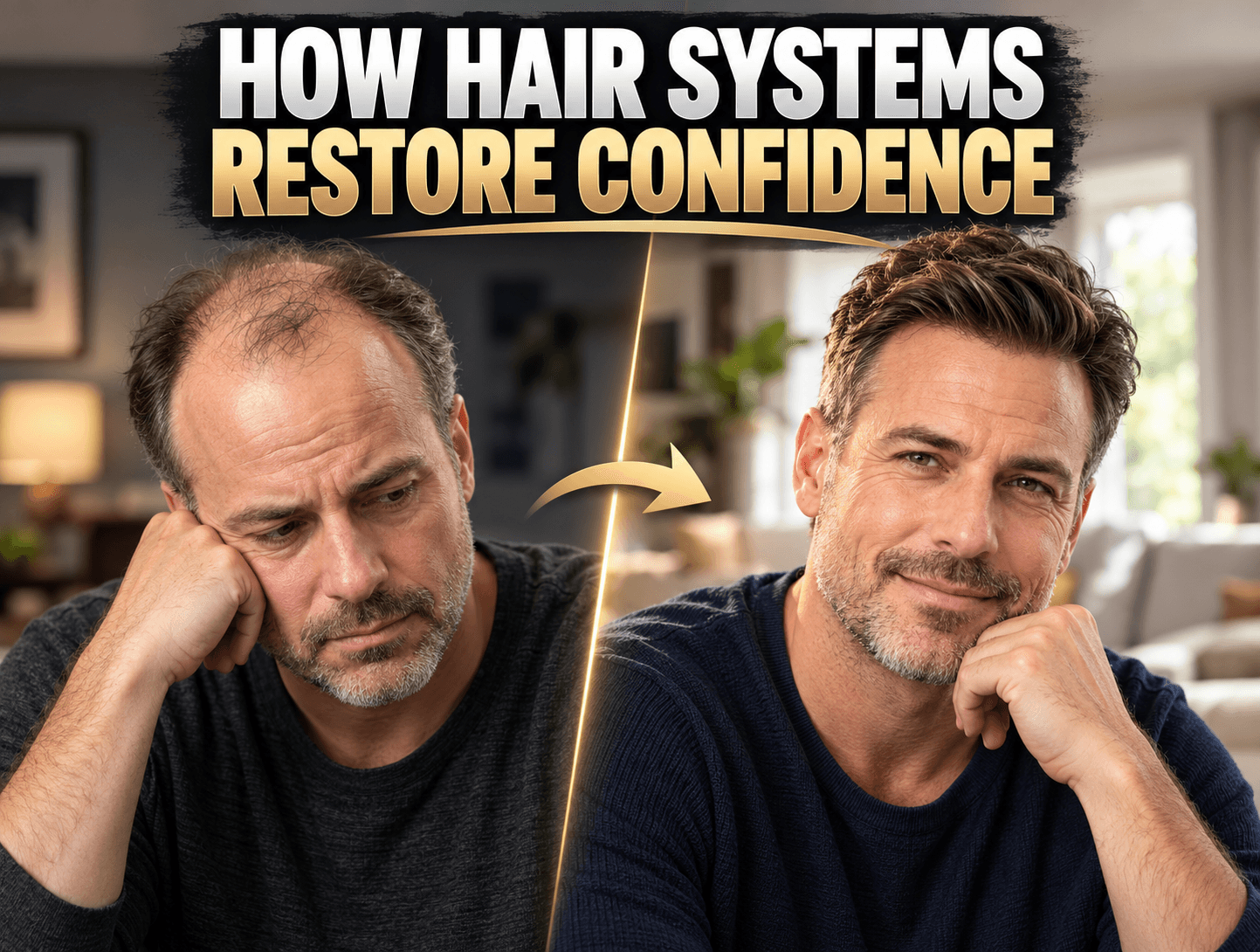
For many years, you may have styled your hair without giving it much thought. Then one day, you notice that the front doesn't sit the same way, the crown shows more clearly under bright light, or a familiar hairstyle becomes harder to maintain. Hair loss often develops gradually, but awareness of it can sometimes feel sudden.
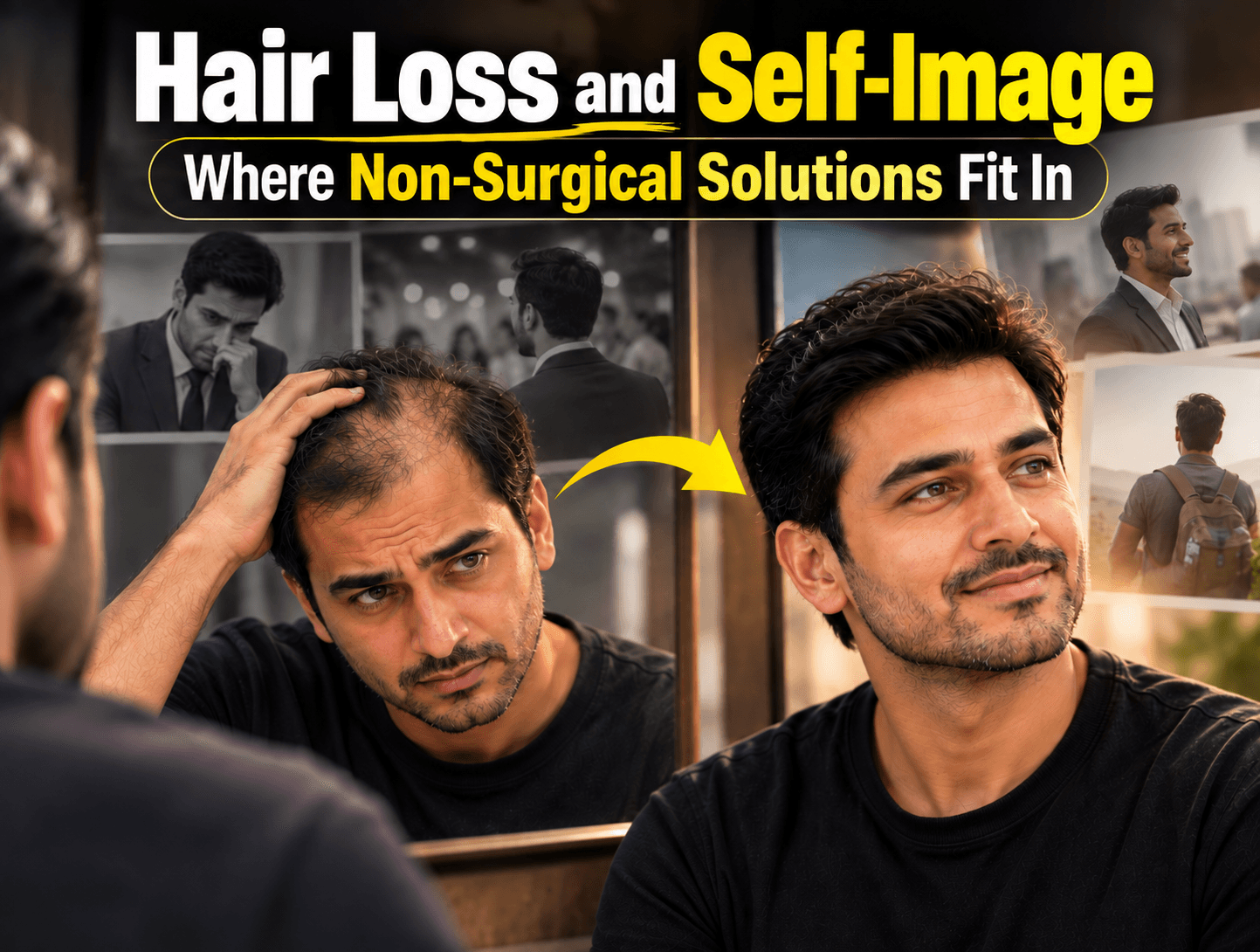
The emotional response can vary just as much as the physical pattern of hair loss. Some men adapt quickly and change their haircut. Others become more conscious of photographs, mirrors, video calls, weddings, meetings, or social occasions because they are still adjusting to a different appearance.
That doesn't mean hair loss changes who they are. It doesn't affect ability, intelligence, professionalism, or personal worth. At the same time, dismissing appearance as completely unimportant isn't always realistic either. People make grooming decisions because they enjoy looking a certain way, and hair can be part of that.
The healthiest starting point is choice. A person can accept visible thinning, change hairstyles, keep the hair very short, or explore hair replacement for men. The aim isn't to decide which response is correct for everyone. It is to understand which approach feels comfortable and realistic for the individual.
What Hair Replacement Means
Non-Surgical Hair Replacement is often misunderstood because the term can sound more complicated than the process itself. In simple terms, it uses a hair system fitted over an area of hair loss to create the appearance of fuller hair without surgically transplanting follicles.
A hair system can be customised around features such as:
Hair colour
Texture or wave pattern
Density
Hairline design
Hair direction
Preferred hairstyle
Existing natural hair
Depending on the particular system, 100% human hair may be used. The idea is not simply to place hair over the scalp, but to coordinate the different elements so the result works with the person's appearance.
The attachment method can also differ. A Clip-On Hair System generally uses clips attached to suitable existing natural hair. It is removable and usually doesn't require shaving. A Stick-On Hair System uses professional adhesive and/or tape for more continuous wear, and the attachment area may need to be shaved depending on the fitting.
A PU Skin Base Hair System uses a thin polyurethane or skin-style base designed to support a scalp-like visual appearance. The base is only one part of the final result; density, colour, hair direction, hairline design, texture, and styling still need to work together.
So, Non-Surgical Hair Replacement isn't one standard system. It is a broader category with different fitting and customisation possibilities.
Why Men Consider It
Not every man who notices hair loss wants to do something about it. Some simply adjust their hairstyle and move on. Others start researching because the changes have reduced the styling options they used to enjoy.
Consider someone who has always worn the front of his hair slightly raised. As the hairline recedes, that style may become difficult to maintain. His interest in a hair system may have less to do with "hiding" hair loss and more to do with wanting his preferred hairstyle back.
Another person may have significant thinning at the top while still having natural hair around the sides and back. He may be interested in a custom hair replacement system because he wants physical hair that can be shaped and blended with what remains.
Others specifically prefer a non-surgical approach. A non surgical hair replacement system doesn't use donor follicles and doesn't attempt to regrow natural hair. It provides coverage through a fitted system, which makes it fundamentally different from a Hair Transplant.
The reasons can therefore be practical as well as personal:
More hairstyle flexibility
Fuller-looking physical hair
A non-surgical option
Greater control over density and hairline design
Customisation around existing hair
The ability to choose an appearance that feels familiar
None of these reasons means a person needs hair replacement. They simply explain why it may appeal to someone whose preferences align with what a hair system can offer.
Creating a Natural Look
One common question is: what actually makes a hair system look natural?
There isn't one single answer. A believable result is usually created by several smaller decisions working together.
Element | Why It Matters |
|---|---|
Hairline | Influences how the front looks when the forehead is visible |
Density | Needs to suit the person's age, features, hairstyle, and remaining hair |
Colour | Helps the system blend with existing natural hair |
Texture | Should work with straight, wavy, or curly natural hair |
Hair direction | Influences how naturally the hair falls and styles |
Hairstyle | Connects the system with the person's preferred overall look |
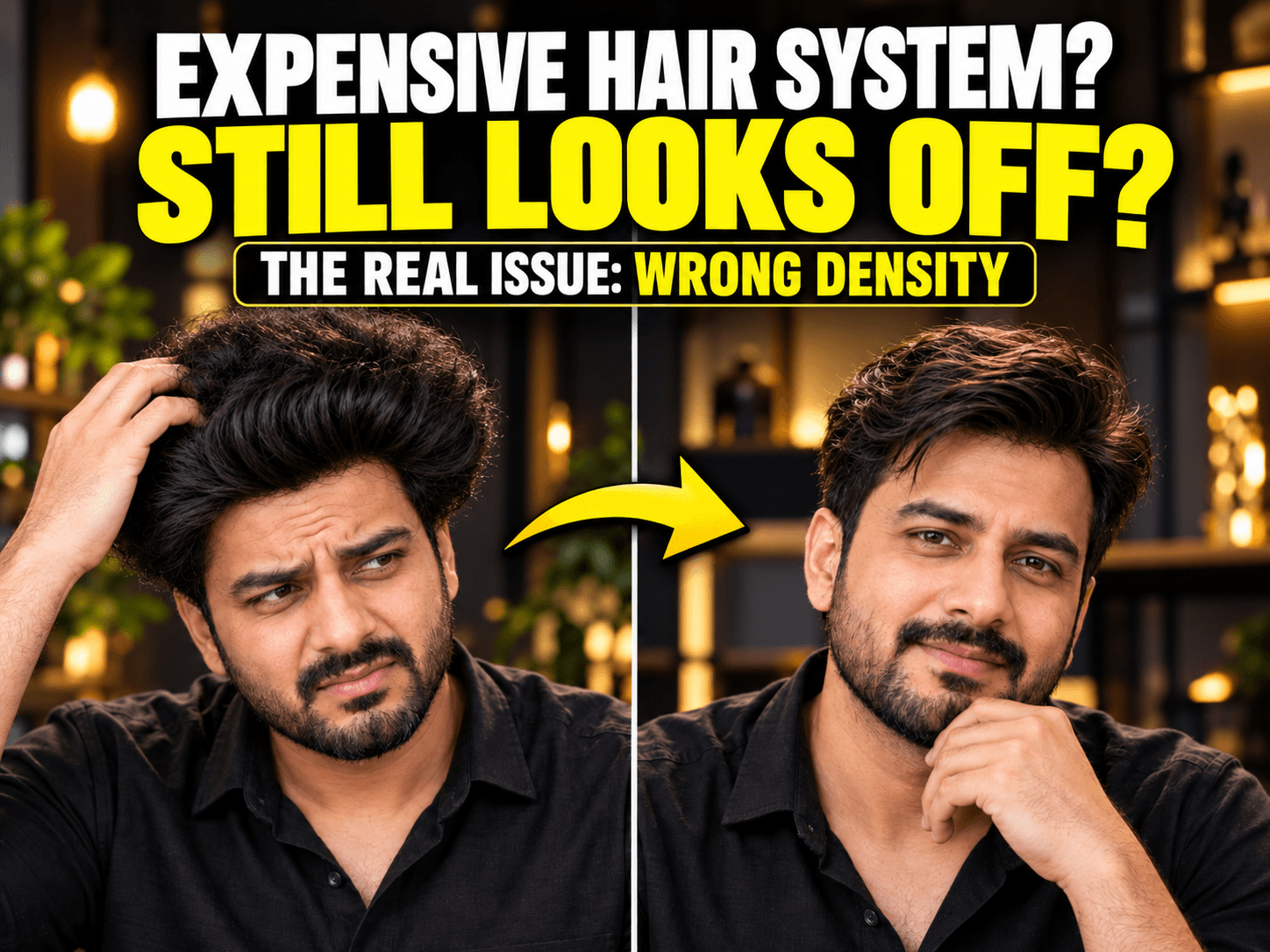
Density is a good example of why more isn't always better. Very high density may look appropriate for one person but out of place on another. A realistic choice usually considers age, remaining natural hair, facial features, and hairstyle rather than simply aiming for maximum fullness.
The same applies to the hairline. A straight, heavily defined hairline won't suit every face. Its shape, placement, direction, and density need to complement the individual, especially when the chosen hairstyle exposes the forehead.
Texture and colour are equally important when natural hair remains around the system. If the surrounding hair has a particular wave pattern or shade, the new hair needs to work with it rather than compete with it.
This is why natural hair replacement is best viewed as a customisation process. The result depends on the combination of details, not on one feature alone.
Lifestyle and Hair Systems
A hair system isn't only something you see in the mirror. It becomes part of everyday grooming, which means lifestyle can influence the type of system and attachment that feels practical.
Someone who prefers removing the system regularly may be more interested in a Clip-On Hair System, provided there is enough suitable natural hair for attachment. Someone who wants more continuous wear may prefer exploring a Stick-On Hair System using professional adhesive or tape.
Now think about daily routine. A person who works at a desk most of the day may have different priorities from someone who trains regularly, travels often, rides a bike, or frequently wears a helmet. Sweat, Indian heat, humidity, outdoor activity, and styling habits can all be relevant when deciding how a hair system should fit into daily life.
Maintenance is another practical consideration. Hair systems require appropriate handling and care, although the exact routine varies according to the system and attachment method. Washing, conditioning, scalp care, grooming of remaining natural hair, and careful styling may all form part of that routine.
A useful way to think about lifestyle suitability is this: the hair system shouldn't only suit the hairstyle you want on fitting day. It should also make sense on an ordinary Monday morning, during your normal workday, while travelling, and when following your usual grooming routine.
That practical fit often matters just as much as appearance.
Finding the Right Fit
Rather than searching for the "best" hair replacement system, it is more useful to find the option that matches your own requirements.
Start with the hair itself. Where is the thinning concentrated? How much natural hair remains? Is there enough suitable hair for clip attachment, or would another fitting approach make more sense? These questions influence which systems are worth considering.
Next comes appearance. Think about the hairstyle you actually want to wear rather than choosing based only on an image of someone else's result. A short, neat style may require different density and hair direction from a longer textured look. If the forehead will remain visible, hairline design becomes especially important.
Then consider how you want to wear and manage the system.
Ask yourself:
Do I want to remove the system regularly?
Would I prefer more continuous wear?
What hairstyle do I normally feel most comfortable wearing?
How active is my everyday routine?
Am I prepared for the required hair-system care?
How much natural hair remains around the area of hair loss?
How important is an exposed front hairline to my preferred style?
These questions are more useful than choosing a hair system based on popularity. Two men with similar hair loss may still need different solutions because their existing hair, attachment preferences, hairstyles, and routines aren't the same.
Professional customisation can then bring those decisions together through suitable colour, texture, density, hairline design, attachment, and blending. The goal is not to recreate somebody else's hair. It is to create a result that works with the individual wearing it.
FAQs
Does choosing a hair system mean I haven't accepted my hair loss?
No. Accepting hair loss and choosing to change your appearance aren't necessarily opposites. Someone can understand and accept their hair loss while still preferring the way they look with fuller hair.
Can Non-Surgical Hair Replacement look natural?
A natural-looking result can depend on appropriate hairline design, density, texture, colour, hair direction, styling, and blending. Customisation is therefore an important part of the overall appearance.
Does a hair system regrow natural hair?
No. A hair system provides physical hair over areas affected by hair loss. It doesn't regrow natural follicles.
Will my natural hair need to be shaved?
That depends on the attachment method. Clip-On Hair Systems generally don't require shaving, while some Stick-On Hair System fittings may require shaving in the attachment area.
Can I select my own hairstyle?
Hair systems can be customised around hairstyle as well as colour, texture, density, hairline design, and other relevant factors. The selected style should also work with the person's remaining natural hair and overall appearance.
Can active people wear hair systems?
An active lifestyle doesn't automatically rule out a hair system. Exercise, sweat, travel, helmets, heat, humidity, attachment type, fitting, and care should all be considered when choosing an option.
Conclusion
Hair loss can change appearance, but it doesn't have to dictate how someone feels about themselves. Some men are comfortable leaving their hair exactly as it is, while others prefer the styling possibilities that come with fuller-looking hair. Both choices can be completely personal.
Non-Surgical Hair Replacement fits into this conversation as an appearance and grooming option rather than something every person with hair loss needs. For someone who prefers physical hair without transplant surgery, the right combination of attachment, customisation, hairstyle, and lifestyle suitability can help create a solution that feels appropriate to everyday life.
Call us 📞+91 9222666111 today for personalized guidance on hair loss solutions! 📍 Book your consultation now at www.americanhairline.com and start your journey with Non Surgical Hair Replacement today. 👉 [Fill out this form for personalised advice.]
Ready to regain your confidence?
American Hairline provides premium, non-surgical hair replacement systems designed specifically for you. Don't wait to change how you feel.
0 Comments
No comments yet. Be the first to share your thoughts!
Leave a Reply
Your email address will not be published. Required fields are marked *