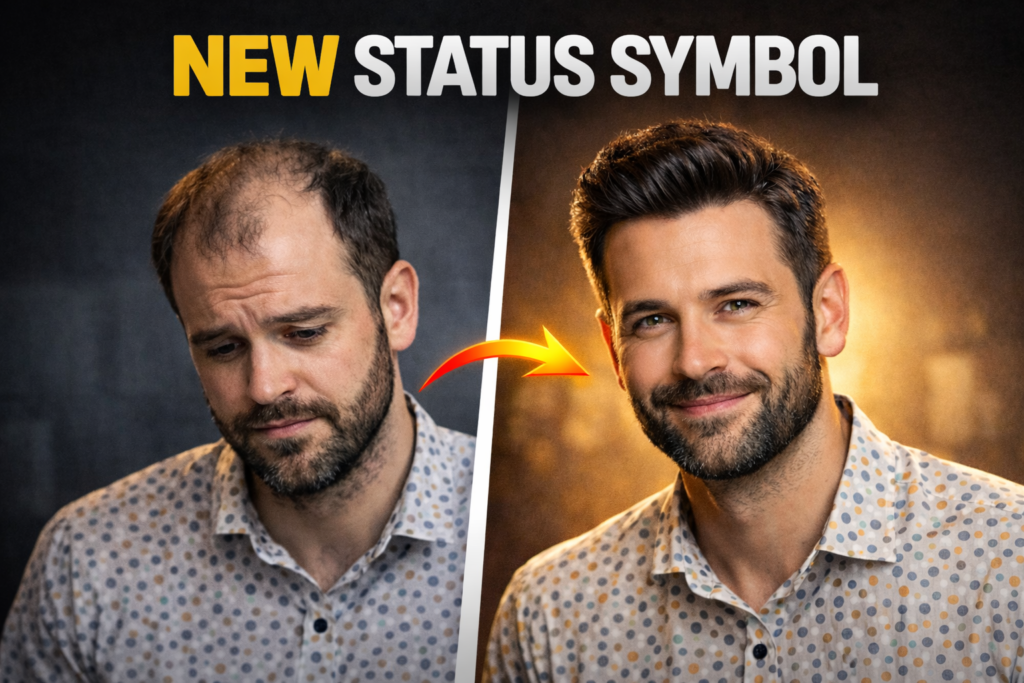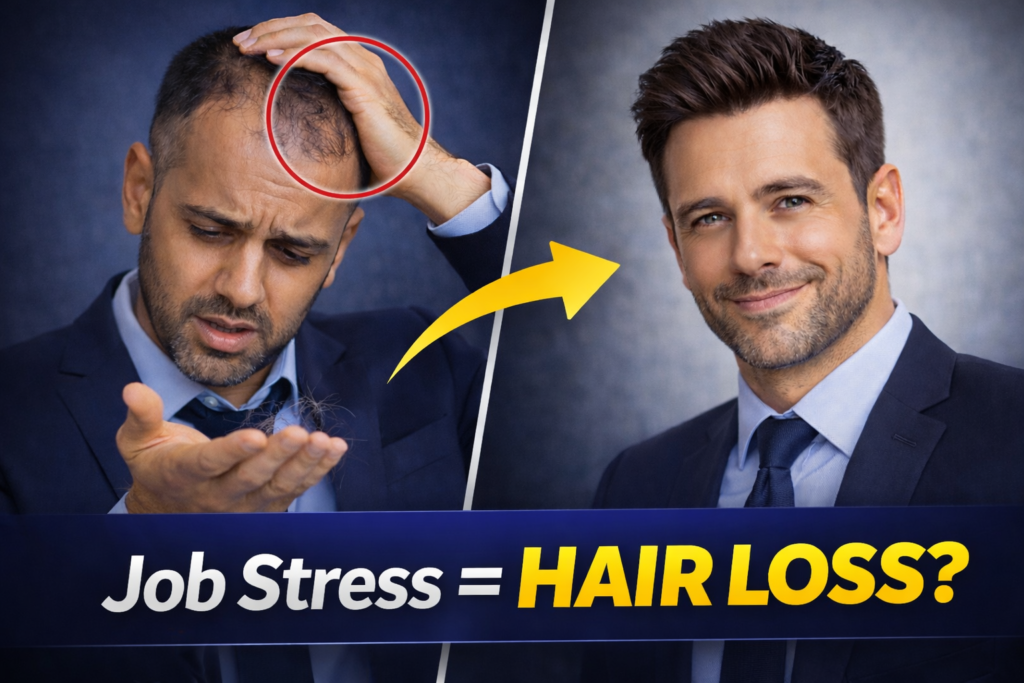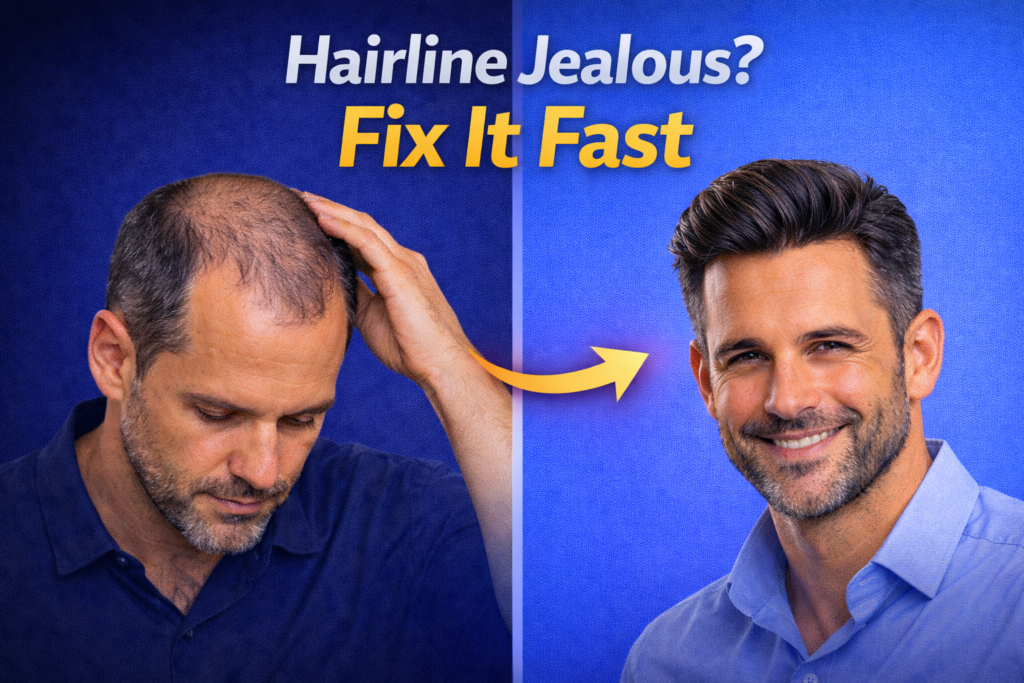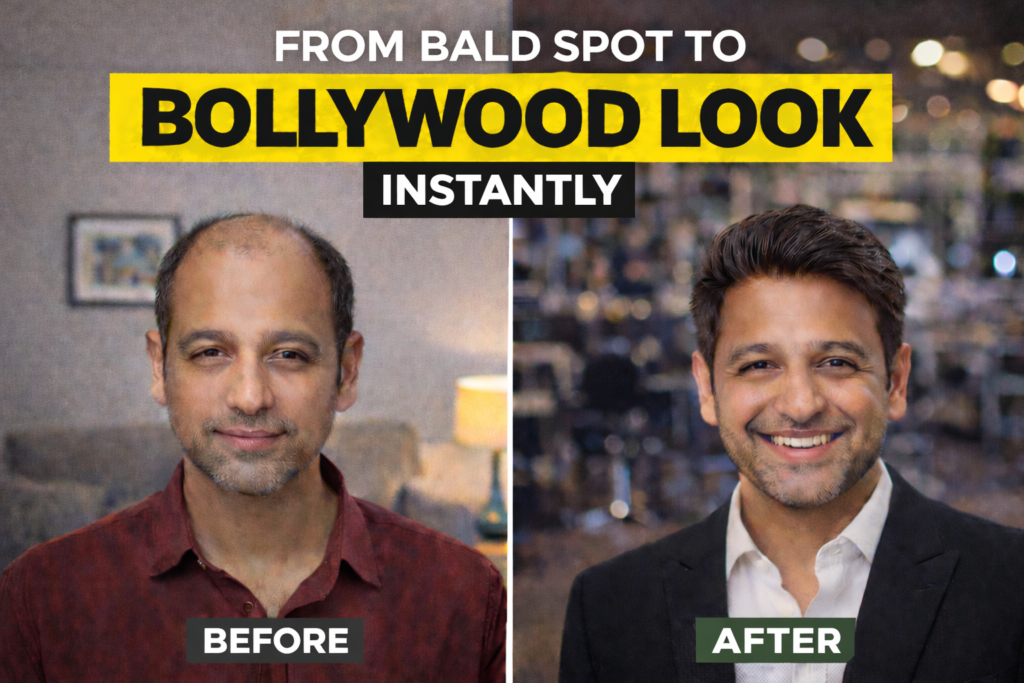

“What if it looks like a patch?”
This fear doesn’t come from facts—it comes from old memories and outdated images.
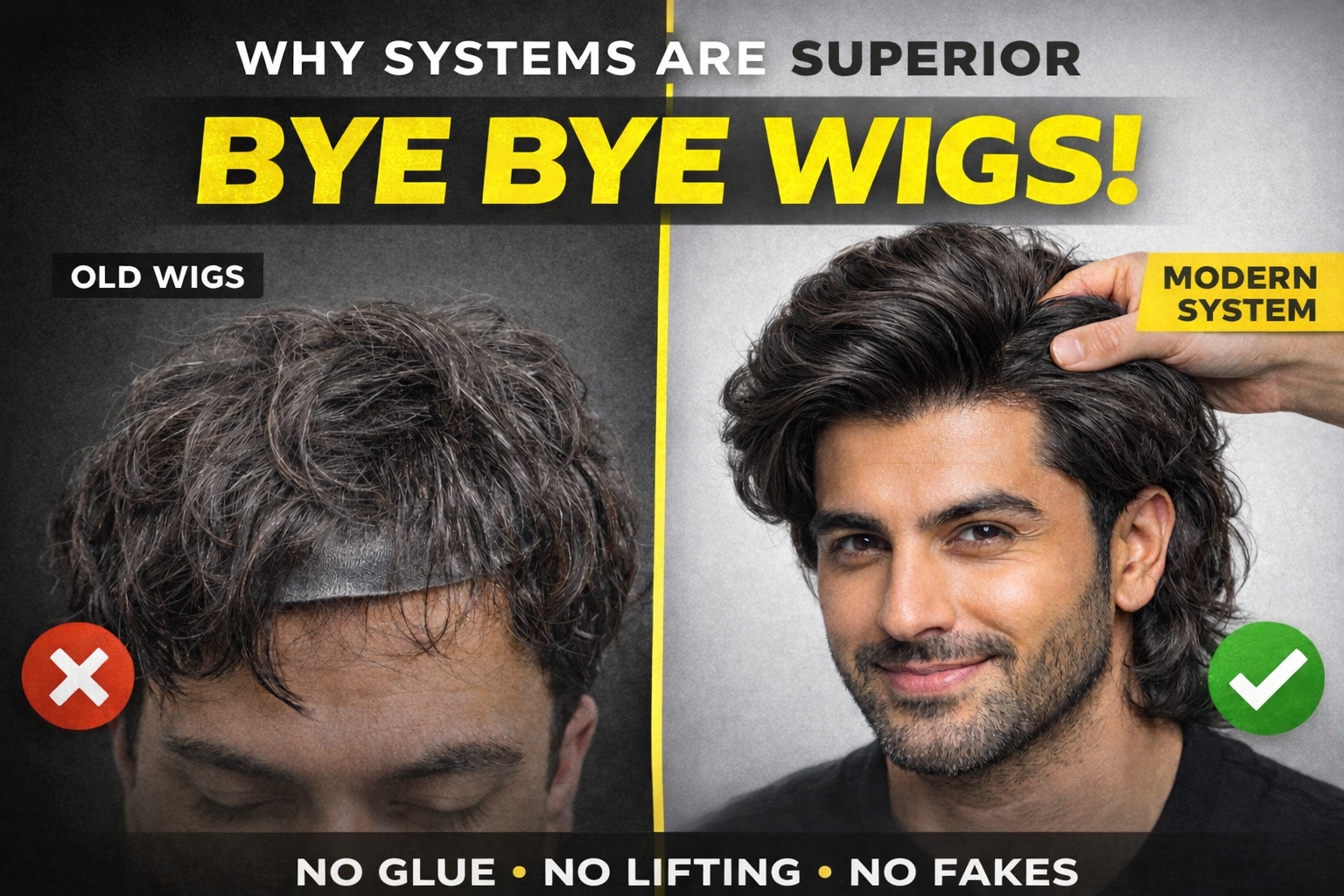
Many people still imagine bulky wigs, shiny synthetic hair, thick borders, and obvious hairlines. That mental picture creates hesitation and embarrassment before logic even enters the conversation.
But that image belongs to the past.
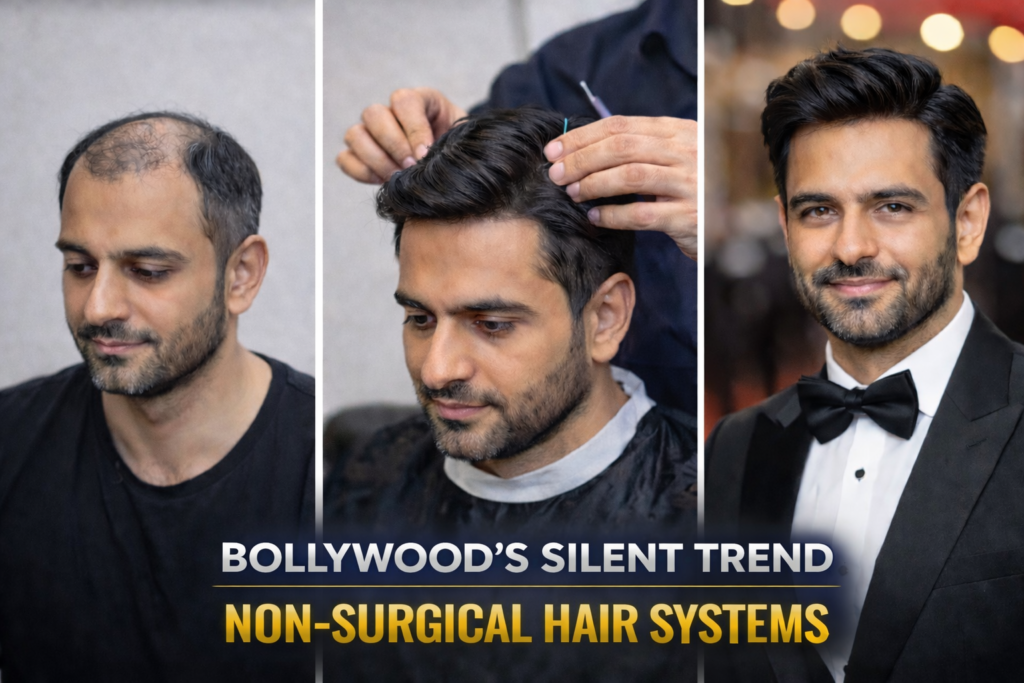
Modern non surgical hair systems have evolved completely. Today’s systems use advanced materials, natural hairlines, and precision customization that look and feel like real hair. What people fear today is based on decades – old visuals – not current reality.
The truth is simple:
What exists now looks nothing like what people imagine.
Where the “Patch Panic” Myth Comes From
The fear didn’t come from nowhere – it was built over time.
In earlier decades, hair patches and wigs were often thick, heavy, and poorly designed. The goal back then was coverage, not realism. Manufacturers focused on hiding baldness rather than recreating how hair actually grows from the scalp.
Most systems were made using shiny synthetic fibres that reflected light unnaturally. Under indoor lighting or sunlight, this shine immediately exposed the hair as artificial. Instead of mimicking real hair behavior, these fibres behaved like plastic.
Fit was another major issue. Patches were often loosely placed or clipped incorrectly, without proper scalp mapping or secure bonding. Many relied on clips or rudimentary attachments that caused movement, lifting, or shifting, especially during daily activities like bending, sweating, or turning the head.
On top of this, almost all solutions followed a rigid one size fits all approach. Everyone wore the same base shape, same density, same hair direction, regardless of age, face structure, or hair loss pattern. There was little understanding of:
- Individual scalp curvature
- Natural hairline recession patterns
- Density distribution across different age groups
- Lifestyle needs (work, sports, heat, humidity)
As a result, older systems didn’t blend with the scalp. They sat on top of it. Edges lifted easily. Hairlines looked painted or stamped on. Density appeared either too thick or unnaturally uniform. Even from a distance, the system could draw attention for the wrong reasons. So when people hear the word patch today, their mind immediately jumps to those outdated visuals. The technology has evolved, but the emotional memory remains, because old impressions are hard to forget.
Why Old Wigs Looked Fake (And Modern Hair Systems Don’t)
| Aspect | Old Wigs (Why They Failed) | Modern Hair Systems (Why They Work) |
| Base Material | Used thick fabric, heavy mesh, or coarse net bases that sat above the scalp | Use ultra-thin skin or advanced lace bases that visually merge with the scalp |
| Scalp Appearance | Reflected light unnaturally, cast shadows, and created visible borders | Lies flat on the skin, mimics scalp tone, and reflects light naturally |
Movement | Stiff materials caused hair to move unnaturally, breaking realism | Flexible bases move naturally with head and facial movement |
| Hairline Design | Straight, dense, uniform hairlines that ignored natural growth patterns | Graduated hairlines with softer density at the front that disappear visually |
| Close-Up Visibility | Obvious in conversations, photos, and under bright lighting | Undetectable even at close distance and in strong lighting |
| Customization | Mass-produced: same density, direction, and base shape for everyone | Fully customized to the individual’s age, scalp shape, density, and hair flow |
| Hair Direction & Flow | Ignored natural growth direction, making hair sit unnaturally | Designed to follow natural hair growth and styling habits |
| Overall Result | Looked like headgear or a wig | Looks, behaves, and feels like real hair |
The Technology Behind Natural Hair Systems
Today’s non surgical hair systems are built using advanced materials designed to disappear on the scalp , both visually and physically.
Modern systems use:
- Ultra-thin skin bases, sometimes as thin as human skin
- Fine lace bases that mimic natural scalp texture
- 100% human hair, hand-knotted or injected
- Graduated hairlines that replicate natural growth patterns
Every system is customised to:
- Scalp shape and curvature
- Hair density based on age and preference
- Hair direction and flow
- Hair colour, undertone, and texture
- Hairline design and recession pattern
This level of detail ensures that the system doesn’t behave like an accessory, it behaves like anatomy.
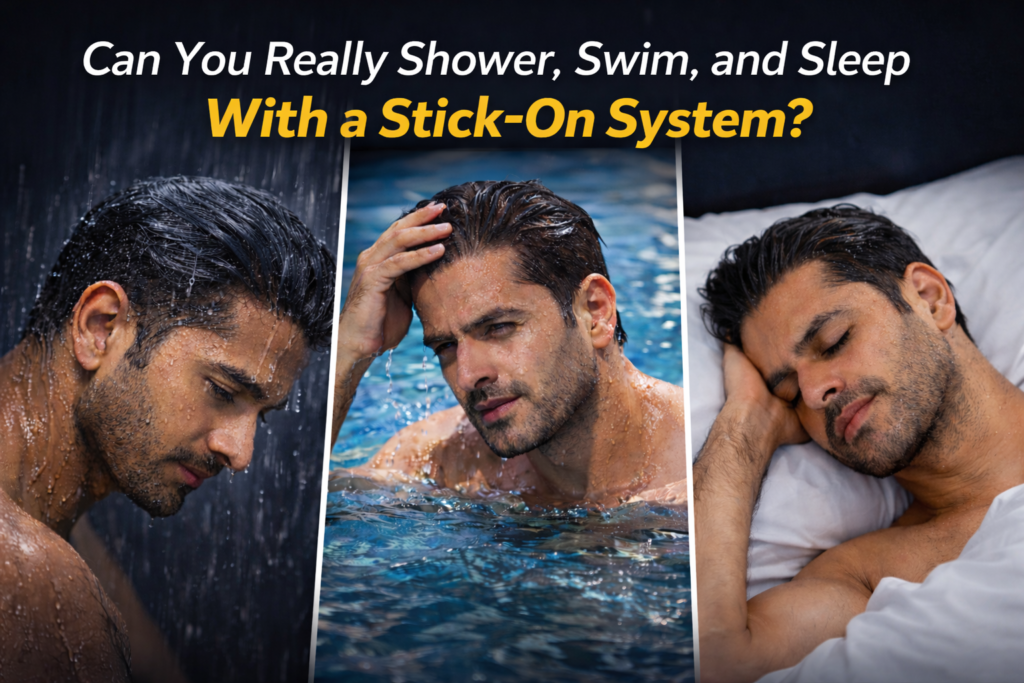
It responds naturally to:
- Wind
- Sweat
- Touch
- Movement
This isn’t cosmetic camouflage.
It’s anatomical precision.
Hairlines, Bases, and Real-World Detection
In the past, the hairline was the biggest giveaway.
Today, it’s often the strongest point.
Modern systems feature:
- Soft, irregular hairlines (never straight lines)
- Gradual density from front to crown
- Transparent bases that blend with skin tone
- Adhesives engineered for sweat, motion, and long wear
Under real world conditions such as:
- Office lighting
- Gym workouts
- Outdoor sunlight
- HD cameras and phone lenses
A well fitted system remains undetectable.
Most people don’t “look for” hair systems because they don’t expect them to exist at this level of realism. When hair behaves normally, the brain accepts it as normal.
Detection only occurs when design or maintenance breaks that natural pattern.
Why Most People Never Notice
Here’s an uncomfortable truth:
People don’t examine your hair the way you do.
What they actually notice is:
- Confidence
- Body language
- Eye contact
- Ease of movement
When hair looks natural, the brain quickly categorises it as “normal” and moves on.
Detection usually happens only when something feels off:
- Excessive or unnatural density
- A poorly designed hairline
- Lack of customisation
- Neglected maintenance
When a system is designed and maintained correctly, there’s nothing for the eye to question.
That’s why many professionals, actors, entrepreneurs, and executives wear hair systems quietly, for years, without anyone realising. Not because people are fooled, but because there is nothing unusual to detect.
Confidence Is the Real Difference
Patch panic isn’t really about hair.
It’s about the fear of exposure.
The fear that someone will notice.
The fear of being judged.
The fear of losing control over how one is perceived.
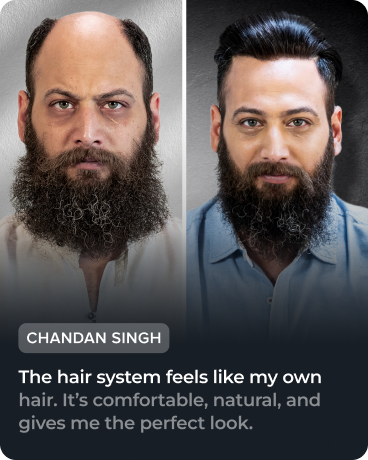
Once someone experiences a well-designed hair system, that fear begins to dissolve.
Self-consciousness drops.
Posture improves.
Social interactions feel easier.
Presence feels natural again.
Confidence returns, not because of hair alone, but because the mind stops worrying.
And that inner shift is what people respond to most.
Final Thoughts: The Fear Is Old. The Solution Is New.
The “patch panic” myth belongs to another era.
Modern hair systems are:
- Lightweight
- Natural
- Custom-built
- Undetectable
- Reversible
- Non-surgical
They don’t sit on your head.
They blend into your identity.
Fear survives on outdated images.
Confidence comes from updated reality.
Call us 📞+91 9222666111 today for personalized guidance on hair loss solutions!
📍Book your consultation now at www.americanhairline.com
start your journey with Non Surgical Hair Replacement today. 👉 [Fill out this form for personalized advice.]