
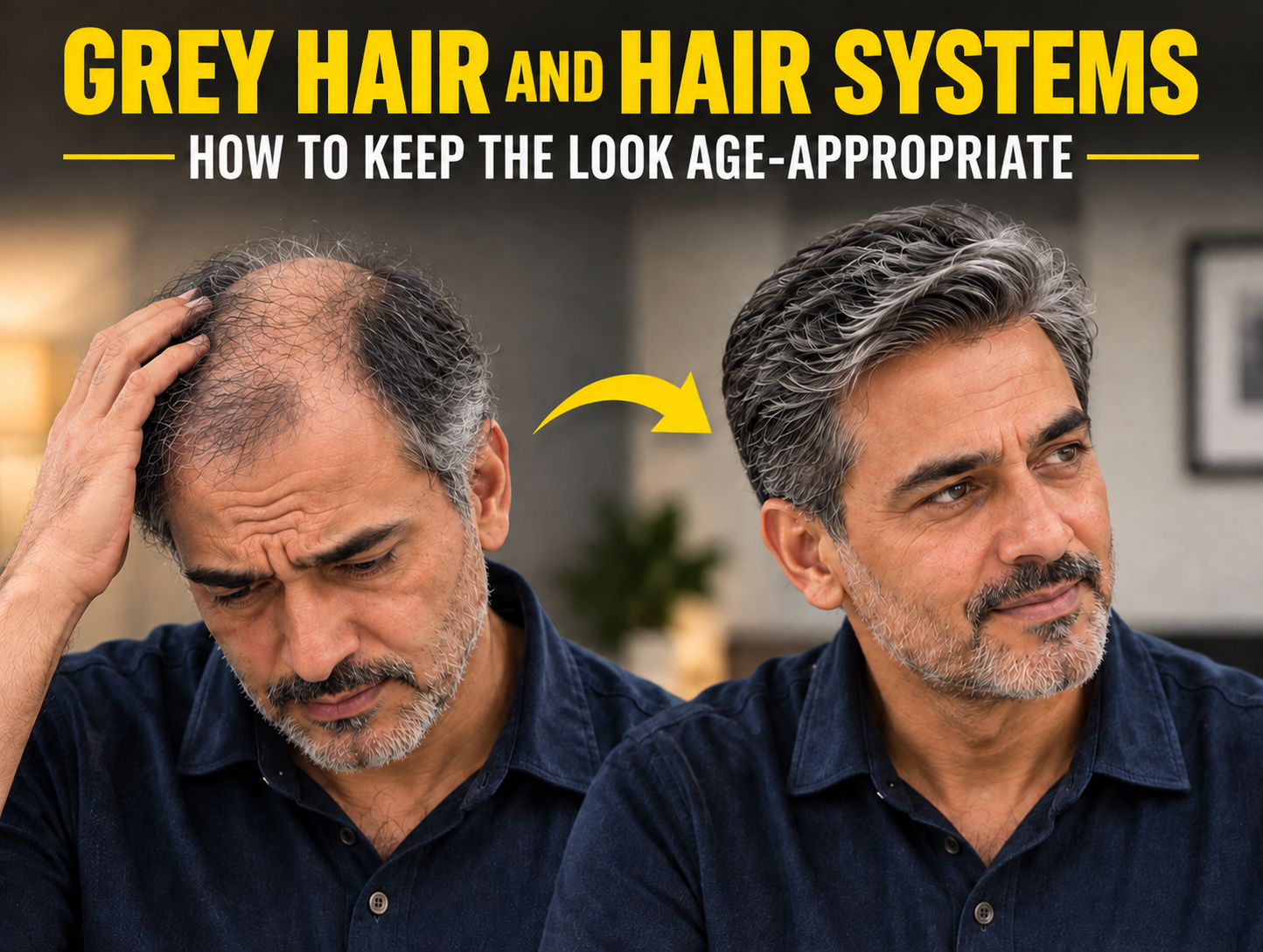
Grey hair doesn’t follow a fixed pattern. One man may notice a few silver strands around his temples in his thirties, while another may retain mostly dark hair much later. Some develop an even salt-and-pepper appearance, while others have noticeably more grey around the sides than on the back. This natural variation becomes especially important when choosing a hair system because the colour on top needs to make sense alongside the hair that is still growing naturally.
An age-appropriate hair system isn’t about deliberately making someone look older. It is about avoiding a result that feels disconnected from the person wearing it. Hair colour, grey percentage, density, texture, hairline design, hairstyle, and the remaining natural hair all need to work together. With a customised hair replacement system, these details can be adjusted so the finished hairstyle feels balanced rather than simply looking darker or fuller.
| Table of Contents |
| Grey Hair Matching |
| Natural Hair Blending |
| Grey and Density |
| Choosing the System |
| Hairline and Style |
| Grey Hair Comparison |
| Mistakes and Care |
Grey Hair Matching
The first step in creating a suitable grey hair hair system is understanding what the wearer’s natural grey actually looks like. Grey is not one single shade. It may appear silver, white, ash-grey, or as softer lighter strands mixed through black or brown hair. Even on the same person, the temples can look considerably greyer than the hair at the back, which means matching only one section may not produce the most balanced result.
This becomes important in Non-Surgical Hair Replacement because the hair system normally needs to work visually with the natural hair around it. If the sides contain a noticeable salt-and-pepper pattern but the system is completely dark, the difference can sometimes make the top appear separate from the rest of the hairstyle. A custom hair replacement system can instead include an appropriate amount of grey so that the transition between the system and natural hair feels more consistent.
The objective should not be to calculate grey purely according to age. Two men of the same age can have completely different hair colours and greying patterns. One may still have dark natural hair with only slight greying near the ears, while another may already have predominantly silver sides. Hair system colour matching therefore works better when it is based on the individual’s real hair rather than assumptions about what a certain age group should look like.
Facial hair can also influence the overall impression. A man with a noticeably grey beard but completely dark hair on top may prefer a slightly different balance from someone whose beard and natural hair remain mostly dark. This doesn’t mean the colours must match exactly. It simply means the whole appearance should be considered together when deciding how much grey belongs in the hair replacement system.
Natural Hair Blending
Blending is one of the most important parts of an age-appropriate hair replacement for men. A hair system is only one part of the complete hairstyle. The natural hair at the sides and back continues to frame the face, so its colour, texture, density, and length can strongly influence how the system looks once everything is styled together.
The sides and back are often useful reference points when planning a natural hair replacement. If the sides contain a combination of darker and lighter strands, a similar balance may be introduced into the system where appropriate. This does not always mean distributing grey equally across the entire top. A customized approach may use more or less grey depending on how the wearer’s own pattern has developed.
Texture also needs attention. A colour match can be accurate, yet the hair may still feel visually different if the system has a very different texture from the natural hair. Slight waves, straight hair, softer movement, or a coarser appearance all influence how well the top connects with the sides. Matching these characteristics can help make the hairstyle feel like one complete look.
This is where professional customisation of human hair replacement becomes useful. Colour matching, grey placement, texture, density, and hairstyle can be considered together rather than making one decision at a time. The aim is not to make every strand identical. Natural hair itself contains variation, and allowing for that variation can help a hair replacement system look more realistic.
Grey and Density
Grey percentage and hair density are closely connected because both change the visual weight of a hairstyle. A very dark, dense system can create a strong appearance, while introducing lighter strands may make the overall look feel softer. Neither approach is automatically right or wrong. The choice depends on the wearer’s existing natural hair, face, age, hairstyle, and preferred appearance.
A man with only a few grey strands around the temples may need a small amount of grey in his custom hair system. Someone with clearly established salt-and-pepper hair may benefit from a more visible blend. If the natural sides are predominantly silver, using very little grey on top can sometimes produce a noticeable colour difference.
Density should be planned with the same level of care. It refers to the amount of hair distributed throughout the system, and more density does not automatically create a more natural-looking hair system. If the natural sides have become finer over time, extremely heavy density at the top may make blending more difficult. At the same time, some men naturally retain thick hair even after it becomes grey, so reducing density simply because of age would not always make sense.
A personalised approach can consider grey percentage and density together. The goal is to create fuller-looking hair while keeping the overall hairstyle believable for the wearer. This allows the hair replacement system to provide useful coverage without forcing every man into the same colour or density pattern.
Choosing the System
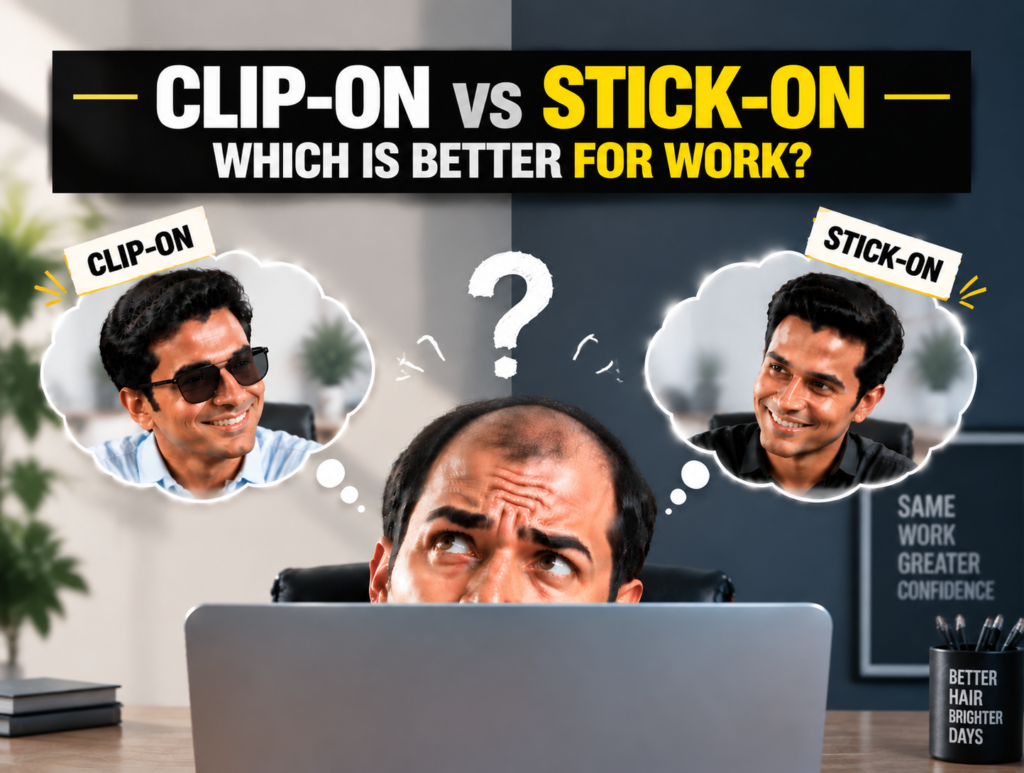
The type of hair system can also influence how the overall look is planned. Options such as a Clip-On Hair System and Stick-On Hair System can be considered depending on the wearer’s existing hair, hair-loss pattern, attachment preference, lifestyle, and how they would like to use the system. The colour and grey customisation still need to work with the individual regardless of the attachment method selected.
A Clip-On Hair System is removable and generally attaches to suitable existing natural hair using clips. It usually does not require shaving, which may appeal to men who want to retain their existing hair and remove the system when they prefer. Because natural hair remains important for attachment and blending, grey hair matching around the sides and surrounding areas becomes particularly relevant.
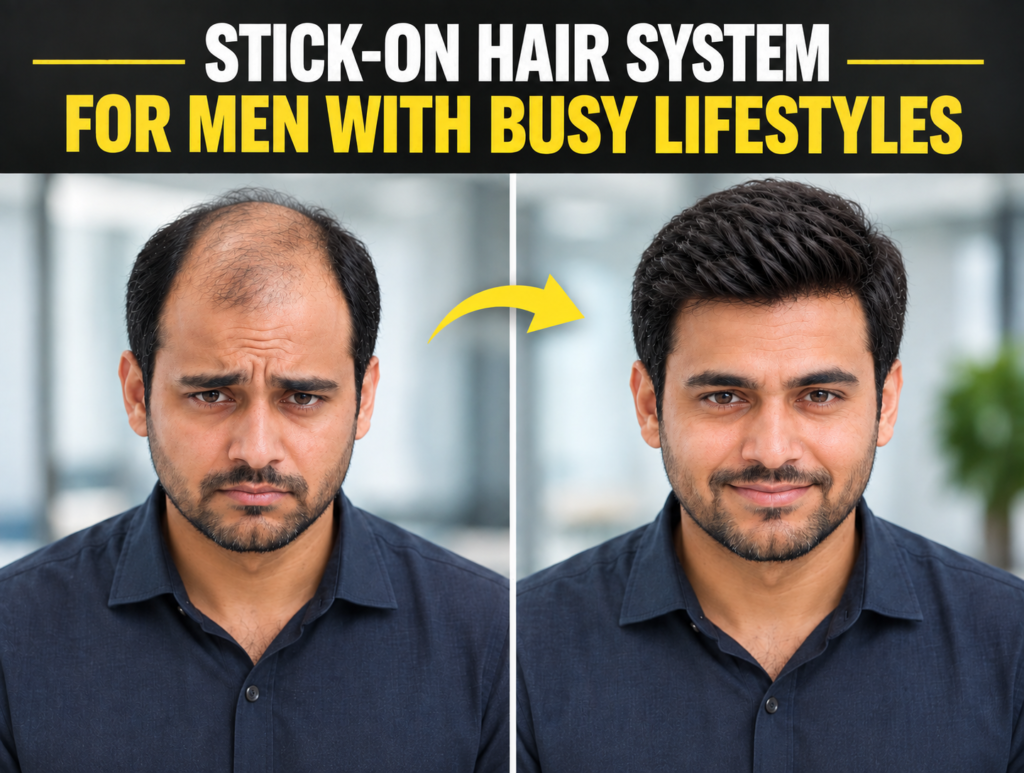
A Stick-On Hair System uses professional adhesive and/or tape and is designed for more continuous wear. Depending on the fitting and hair-loss area, some hair in the attachment zone may need to be shaved. Grey colour matching remains just as important because the visible natural hair around the system should still connect visually with the colour, texture, and density on top.
When deciding between hair system options, it helps to look beyond colour alone. Relevant considerations can include:
- How much suitable natural hair remains
- Whether removability is important
- Preference for occasional or more continuous wear
- Hair-loss pattern and attachment area
- Lifestyle and everyday routine
- Desired hairstyle and styling habits
- Natural grey distribution around the sides and back
Neither system type needs to be treated as universally better. Someone who prefers removability and has suitable natural hair may find a Clip-On Hair System appropriate, while another person may prefer the continuous-wear approach of a Stick-On Hair System. Grey hair customisation can be adapted to either option based on the wearer’s natural appearance.
Hairline and Style
Hairline design can have a surprisingly strong effect on whether a hair system feels age-appropriate. The position, shape, density, and direction of the front hair should complement the face rather than follow one standard template. A hairline that looks balanced on one person may appear too low or too strong on someone else, particularly when the natural hair around the temples has already changed with age.
An age-appropriate hairline does not mean deliberately creating recession. It means choosing a front that works with the person’s current features. Some men naturally retain a stronger hairline later in life, while others have softer temple areas or a slightly more mature shape. Hairline design should therefore be personalised rather than based on a fixed age category.
The hairstyle chosen after fitting also plays a role. Men sometimes approach hair replacement hoping to recreate the exact style they wore many years earlier. That may work for some people, but another hairstyle may suit their present-day appearance more naturally. A textured style, side part, brushed-back look, or another suitable shape can be selected according to hair texture, density, facial features, and grey distribution.
Grey itself can become part of the hairstyle rather than something that needs to disappear. Salt-and-pepper hair can add definition to textured styles, while silver tones can work well when the density and hairline are kept balanced. The objective is not simply to make hair appear younger. It is to create a hairstyle that feels appropriate and convincing on the person wearing it.
Grey Hair Comparison
The amount of grey included in a male hair replacement system can change the overall impression considerably. The table below shows some general ways different grey patterns may be approached. These are starting points rather than fixed rules because natural hair varies greatly from one person to another.
| Grey Hair Approach | Overall Look | Blending Focus | Density Consideration | May Suit |
| Minimal grey | Mostly dark with subtle lighter strands | Match early greying around the sides or temples | Follow the wearer’s natural density | Men with only a small amount of visible grey |
| Light salt-and-pepper | Mostly dark with clearly visible grey strands | Connect grey placement with natural side hair | Can work with lighter or fuller density depending on natural hair | Men with noticeable but limited greying |
| Balanced salt-and-pepper | Grey and darker strands are more evenly mixed | Colour tone and placement become more important | Density should complement the sides and back | Men with established greying across several areas |
| Grey-dominant | Silver or grey becomes the main colour | Match the tone, texture, and remaining natural hair | Avoid choosing density independently of surrounding hair | Men whose natural hair is already predominantly grey |
| Custom grey placement | Grey varies across different areas | Follow the person’s individual greying pattern | Can be customised alongside colour placement | Men whose temples, sides, and back have different grey levels |
Someone with mostly grey temples but a darker back may not need the same grey percentage throughout the complete system. Similarly, another man may have evenly distributed silver hair that calls for a more consistent blend. A custom hair replacement approach allows grey placement to follow the individual instead of applying the same formula to every wearer.
The attachment method does not change this basic principle. Whether someone chooses a Clip-On Hair System or Stick-On Hair System, colour and density should still be selected around the natural hair that remains visible. The better the top works with the surrounding hair, the more cohesive the complete hairstyle can appear.
Mistakes and Care
One of the most common mistakes is selecting hair that is considerably darker than the natural sides simply because darker hair is associated with a younger appearance. In practice, a large colour difference can make the hair on top stand apart from the surrounding natural hair. Introducing a suitable amount of grey can sometimes create a softer and more connected result without making the person appear unnecessarily older.
Another mistake is paying attention to grey percentage but ignoring everything else. Accurate colour matching cannot fully compensate for a major difference in texture, density, hairline design, or hairstyle. A natural-looking hair system is usually the result of several small decisions working together rather than one perfect colour choice.
Points worth keeping in mind include:
- Avoid making every area equally grey if the natural pattern is uneven
- Consider whether the natural grey appears white, silver, ash, or mixed
- Match density with the remaining natural hair where appropriate
- Choose a texture that works with the sides and back
- Keep hairline design personalised to the wearer
- Avoid assuming that grey always needs to be covered
- Review colour blending if the natural hair changes noticeably over time
Care also influences how consistently a hair replacement system looks. Gentle handling, suitable washing, conditioning, and careful styling can help maintain the appearance of the hair. The remaining natural hair should also be kept in a suitable shape because overgrown sides or a major change in colour can affect how smoothly the system blends.
Natural hair continues changing with time. Grey may gradually become more noticeable, texture may change, or the wearer may simply prefer a different hairstyle later. A custom hair system does not have to remain identical forever. Adjusting colour, grey distribution, density, or styling when meaningful changes occur can help keep the overall look relevant to the person’s current appearance.
Conclusion
Grey hair can be an important part of making a hair system look balanced rather than something that automatically needs to be hidden. The right amount of grey depends on the wearer’s natural colour pattern, remaining hair, density, texture, hairline, and preferred hairstyle. Looking at these elements together can create a much more age-appropriate result than simply choosing darker hair in an attempt to look younger.
Whether a man prefers a Clip-On Hair System, Stick-On Hair System, or another suitable Non-Surgical Hair Replacement approach, personalisation remains essential. There is no single grey percentage, density, or hairstyle that works for everyone. The most balanced hair replacement is one that fits naturally with the individual wearing it.
Call us 📞+91 9222666111 today for personalized guidance on hair loss solutions! 📍 Book your consultation now at www.americanhairline.com and start your journey with Non Surgical Hair Replacement today. 👉 [Fill out this form for personalised advice.]