
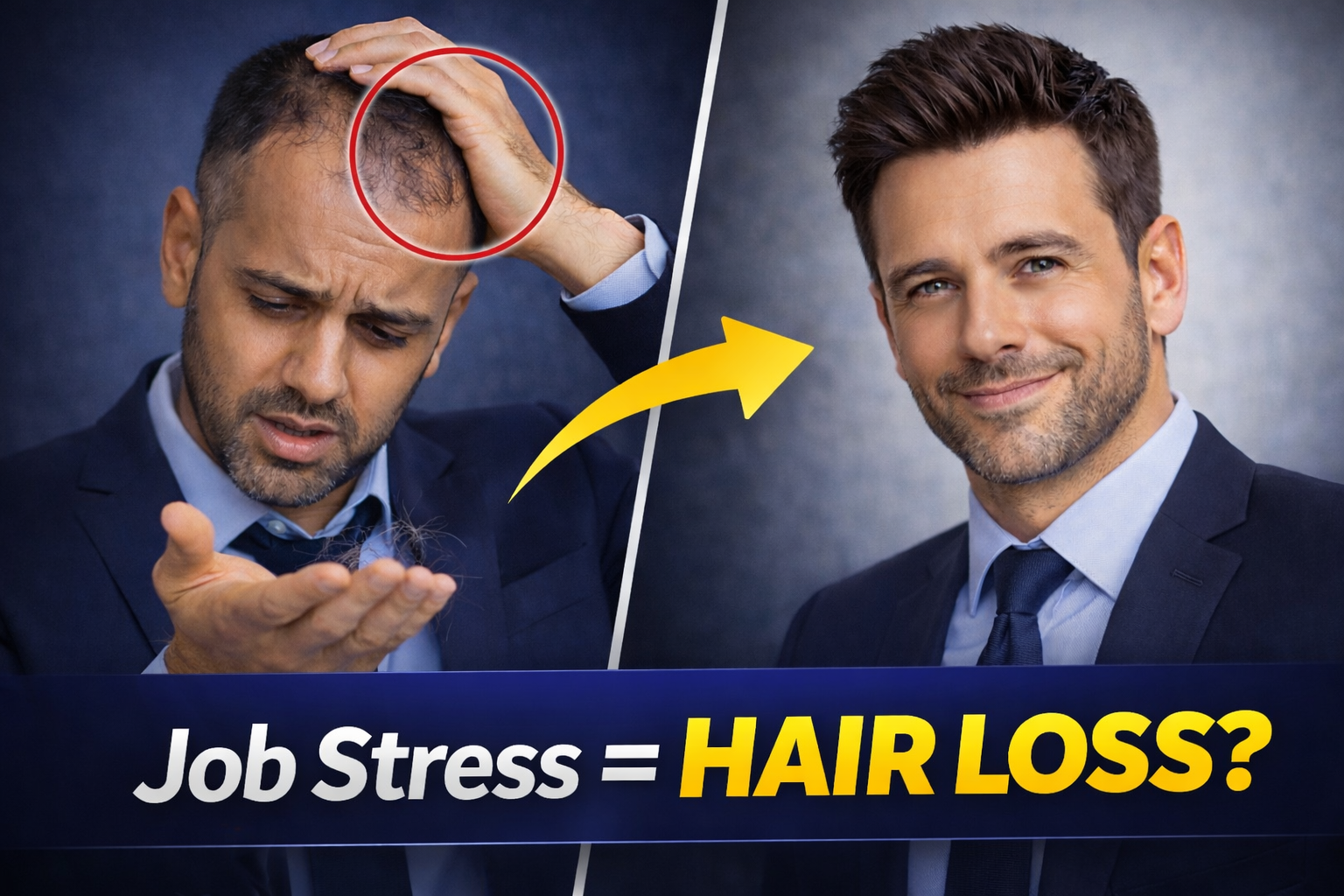
In today’s fast-paced professional world, stress has quietly become a part of daily life. Deadlines, pressure to perform, long working hours, and constant mental load – all of it adds up. While most people are aware of how stress affects their sleep, mood, or energy levels, very few realize what it’s doing to their hair. You might start noticing it slowly – more hair fall in the shower, thinning near the front, or a visible scalp under bright light. And the first thought is usually, “Is this genetics… or something else?” The truth is, for many professionals, rapid hair thinning is not just genetic. There is a hidden factor accelerating it: career stress. Let’s understand how this works – and what you can do about it before it gets worse.
Table of Contents
What Is Stress-Induced Hair Thinning?
Stress-induced hair thinning is a condition where your hair starts shedding faster than it grows due to internal pressure on the body.
It usually happens when:
- your body is under continuous mental stress
- recovery time is low
- lifestyle becomes irregular
Hair growth works in cycles. But when stress interferes, this cycle gets disrupted. Hair enters the shedding phase earlier than it should – leading to noticeable thinning.
This is why many professionals suddenly feel:
- “My hair was fine a few months ago…”
- “Why is it thinning so fast now?”
The good news is that stress-induced hair thinning is largely reversible. Unlike genetic hair loss, this type responds well to lifestyle changes. When you address the root cause – reducing stress levels, improving sleep quality, and maintaining a consistent daily routine – your hair cycle can gradually return to normal. Small, consistent steps toward a balanced lifestyle can make a significant difference over time.
Key Insight: It’s not always genetics – sometimes your lifestyle is accelerating hair loss.
Why Career Stress Is a Major Trigger Today
Modern work culture is very different from before. Today, professionals deal with:
- constant screen exposure
- tight deadlines
- high expectations
- reduced sleep quality
- almost no recovery time
And here’s the important part:
- Your body doesn’t differentiate between “work stress” and “physical danger.”
So when stress increases:
- the body shifts into survival mode
- non-essential functions like hair growth slow down
- nutrients get redirected
Over time, this leads to:
- faster hair thinning
- reduced density
- visible scalp
What makes this even more challenging is that the effects are not immediate – they are delayed. Hair loss from stress typically shows up 2 to 3 months after the stressful period begins, which is why most people fail to connect the two. By the time the thinning becomes visible, the damage has already been building quietly beneath the surface. This delay often leads professionals to blame the wrong cause entirely, when in reality, their daily work pressure has been the silent trigger all along.
Key Insight: The more pressure you handle daily, the more your body quietly compromises hair growth.
The Science Behind Stress and Hair Loss
There is a medically recognized condition called Telogen Effluvium, often triggered by stress. Here’s what happens internally:
- hair prematurely enters the resting (telogen) phase
- growth slows down significantly
- shedding increases rapidly
At the same time:
- cortisol levels rise
- blood flow to the scalp reduces
- hair follicles weaken
This creates a chain reaction where:
- more hair falls out
- less hair grows back
That’s why stress-related hair thinning often feels:
- sudden
- intense
- difficult to control
What most people don’t realize is that Telogen Effluvium can become chronic if the underlying stress is never addressed. In the short term, the body is simply trying to conserve energy by pausing hair growth. But when stress remains constant – week after week, month after month – the follicles stay in this weakened state for longer periods. Over time, repeated cycles of stress and shedding can reduce the overall thickness and volume of hair, making recovery slower and more difficult. This is why early awareness and timely action matter more than most people think.
Key Insight: Stress doesn’t just cause hair fall – it disrupts the entire hair growth cycle.
Signs Your Hair Thinning Is Stress-Related
Not all hair loss looks the same. Stress-related thinning has specific patterns.
You may notice:
- sudden increase in hair fall
- hair shedding without a clear pattern
- overall reduction in volume
- thinning across the top or crown
- hair fall increasing during stressful periods
Unlike genetic hair loss, this type feels:
- unpredictable
- faster than usual
Many people ignore these signs early on – assuming it will settle on its own.
The mistake of waiting and watching can quietly cost you months of recovery time. Stress-related hair thinning rarely reverses on its own if the triggers remain active in your daily life. Each week of unaddressed stress is another week the follicles spend in a weakened state. Recognizing the pattern early -and taking it seriously – gives your body the best chance to reset the hair cycle before the thinning becomes more advanced or harder to reverse. The signs are your body’s way of communicating that something needs to change.
Key Insight: If your hair loss feels “too fast,” stress is likely playing a major role.
Why Ignoring It Can Make It Permanent
This is where most professionals make mistakes.
They delay action thinking:
- “It’s just temporary”
- “I’ll fix it later”
- “Let work settle first”
But the reality is:
- Stress rarely reduces on its own.
And when it continues:
- hair thinning becomes more visible
- density drops significantly
- recovery becomes slower
In some cases, prolonged stress can:
- trigger long-term hair loss patterns
What could have been controlled early becomes harder to reverse later.
Key Insight: The longer you ignore it, the more difficult it becomes to restore natural density.
How to Fix Stress-Related Hair Thinning
Most people look for a single solution – but the truth is, there are two approaches.
Level 1: Internal Management (Slow but Important)
This includes:
- improving sleep
- reducing stress triggers
- maintaining proper nutrition
- managing lifestyle
This helps stabilize hair fall over time.
But here’s the problem:
- results are slow
- and not always visible immediately
Level 2: External Solutions (Immediate Results)
This is where modern solutions change everything.
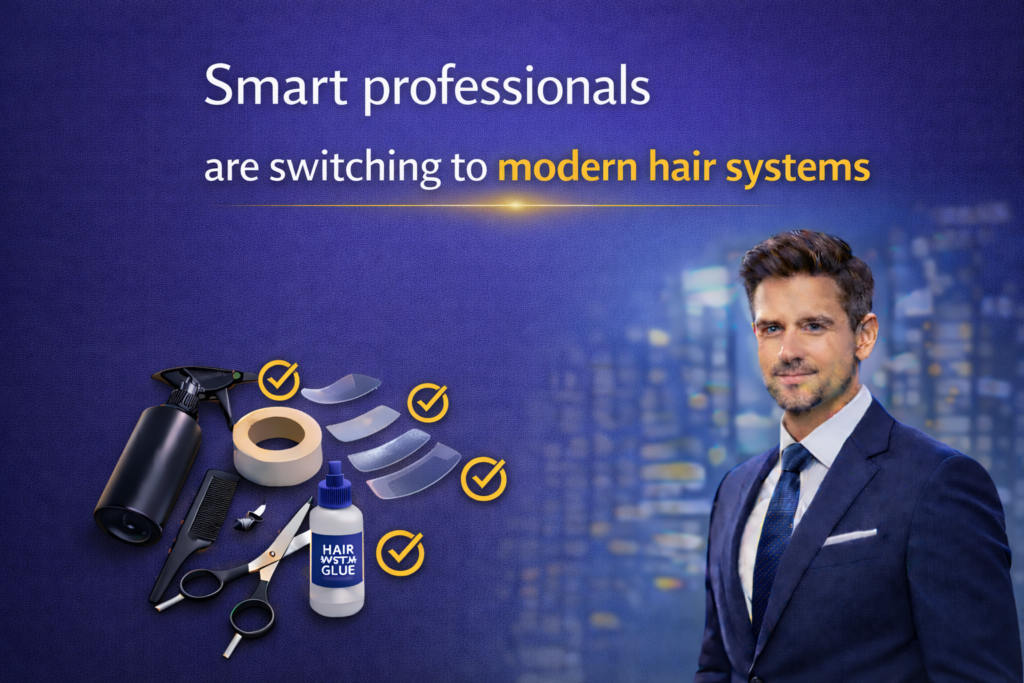
Options like:
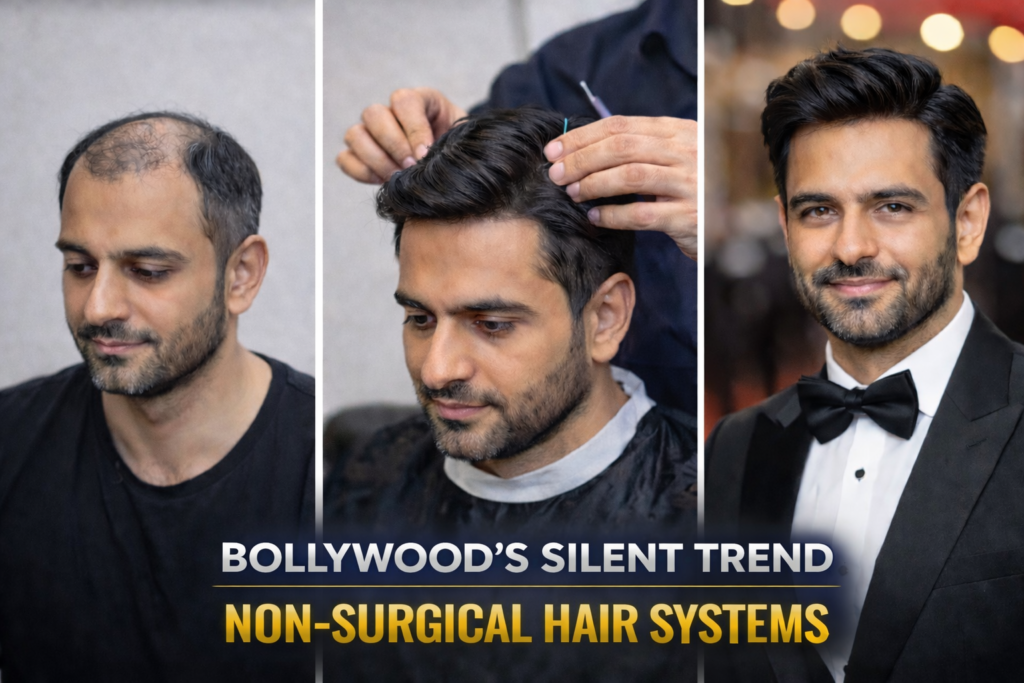
- hair systems
- front hairline patches
- customized hair patches
- clip-on hair systems
- stick-on hair systems
These are designed to:
- restore your hairline instantly
- add natural density
- blend seamlessly with your existing hair
Unlike traditional methods:
- no waiting period
- immediate transformation
- completely natural appearance
Key Insight: You don’t have to wait months to look better – you can fix it instantly.
Choosing the Right Hair Solution
Every individual’s hair loss pattern is different.
Some may need:
The right choice depends on:
- extent of hair thinning
- lifestyle
- maintenance preference
- desired look
The goal is not just to add hair.
- The goal is to make it look undetectable.
That comes from:
- correct hairline design
- proper density
- natural blending
Key Insight: The best solution is the one that looks like your real hair – not something noticeable.
Conclusion
Career stress is something most people accept as normal.
But hair thinning because of it?
- That’s something you don’t have to accept.
The connection between stress and hair loss is real – and often ignored until it becomes visible.
The good news is:
- you can control it
- you can fix it
- and you don’t need surgery to do it
Because today, it’s not just about stopping hair loss.
- It’s about restoring how you feel about yourself.
Call us 📞+91 9222666111 today for personalized guidance on hair loss solutions!
📍 Book your consultation now at www.americanhairline.com and start your journey with Non Surgical Hair Replacement today.
👉 [Fill out this form for personalised advice.]